UnitedHealth Group Today
UNH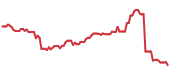
UnitedHealth Group
$410.12 +14.50 (+3.67%) As of 01:57 PM Eastern
This is a fair market value price provided by Massive. Learn more. - 52-Week Range
- $255.96
▼
$461.62 - Dividend Yield
- 2.26%
- P/E Ratio
- 23.44
- Price Target
- $461.48
For the third consecutive quarter, UnitedHealth Group NYSE: UNH delivered a beat on both its top and bottom lines. But, as with the company’s Q2 2026 report, investors gave the news a lukewarm response. UNH shares opened about 5% higher and touched $399.88. By mid-afternoon, they had given back all their gains and slipped below their 50-day moving average.
UNH is down sharply since reaching a 52-week high in July. The earnings report showed that UnitedHealth Group’s turnaround is going well. But with the easy comps in the past, investors are wondering where the growth will come from.
The Report Reinforced the Turnaround Story
In Q3 2026, revenue came in at $112.7 billion, topping expectations, but it was slightly below the $113.2 billion UNH reported a year ago. That decline is by design, and it’s central to understanding this quarter. UNH is shedding members and markets that don’t meet its profit targets.
On the earnings front, the news was even better. This was the fourth consecutive quarter in which UnitedHealth beat expectations for adjusted earnings per share (EPS). Adjusted EPS of $4.69 jumped 61% year over year (YOY). The company also raised its full-year adjusted EPS outlook to at least $20.50, a 25% YOY increase.
But the headline results from the earnings report require context. That context helps explain the lukewarm post-earnings reaction.
A Simpler, More Supportive Model
If investors want to understand UnitedHealth’s Q3 earnings report, they should pay close attention to this statement from CEO Stephen Hemsley:
“Our third quarter results reflect the discipline and execution our teams are bringing to every part of our business, as we continue evolving UnitedHealth Group to deliver a simpler, more supportive experience for patients and the clinicians who care for them.”
In practice, simpler means smaller. UnitedHealthcare served 48.3 million people at the end of September, down from 50.1 million a year earlier. Much of this is deliberate. Medicare Advantage, Medicaid, and risk-based commercial membership each fell about 10%. UNH closed more than 100 Medicare Advantage plans for 2026, covering about 600,000 members. Others left after facing higher costs or thinner benefits.
The payoff shows up in the margins. The medical care ratio, the share of premiums spent on care, fell to 88.4% from 89.9%. UnitedHealthcare’s operating margin rose to 3.3% from 2.1%. Optum Health’s margin climbed to 3.2% from just 0.2%, even as its revenue fell 10%. One caveat: the quarter included $610 million of favorable reserve development, worth roughly 0.7 points on that ratio.
Is the Dividend Enough?
The dividend is an attractive selling point for UNH. The yield of 2.4% isn’t particularly impressive. However, it pays $9.28 per share annually, which is an attractive payout for income-seeking investors. Cash flow supports that payout. Operating cash flow reached $25.1 billion through nine months, up from $18.6 billion a year ago.
It also explains why the stock has rallied hard since closing at a low of around $257 in late March. Healthcare has been a logical choice for investors looking for alternatives outside the technology/AI trade. At 19x forward earnings, UNH also trades at a nice value compared to its history and the broader market.
But a long-term buy-and-hold investment requires some growth, and getting a bit smaller and more selective doesn’t count as growth. At least it doesn’t count in a sustainable way.
Revenue is up just 0.6% through nine months. And the shrinkage isn’t finished. About 390,000 members are in plans to be discontinued for 2027.
Bulls have a fair counterpoint. Margin recovery alone could lift 2027 earnings. The question is how much recovery remains. Investors may get a clearer answer in January, when UNH typically issues its outlook for the year ahead.
The Long-Term Case Remains Intact
Still, UnitedHealth remains one of the best names in the healthcare sector. The 12-month growth in UNH is a testament to that.
This may be a case where investors weren’t wrong, just early. If that’s true, the consensus price target of $462.59, which implies about 18% upside, looks very attractive. But there may be some bumps along the way.
UnitedHealth Group Incorporated (UNH) Price Chart for Thursday, October, 15, 2026
Those bumps are already visible on the chart. Since July, UNH has made lower highs and lower lows. The rising 200-day moving average at $358 is the key support. A move above $400 would challenge the downtrend. A break below $365 would confirm it. Volume is worth watching in the days ahead, since it shows how much conviction sits behind the selling.
Before you consider UnitedHealth Group, you'll want to hear this.
MarketBeat keeps track of Wall Street's top-rated and best performing research analysts and the stocks they recommend to their clients on a daily basis. MarketBeat has identified the five stocks that top analysts are quietly whispering to their clients to buy now before the broader market catches on... and UnitedHealth Group wasn't on the list.
While UnitedHealth Group currently has a Moderate Buy rating among analysts, top-rated analysts believe these five stocks are better buys.
View The Five Stocks Here
A strong long-term portfolio starts with companies that can survive recessions, inflation, changing consumer habits, and shifting market leadership.
This report names seven blue-chip stocks across technology, retail, consumer staples, healthcare, networking, sporting goods, and utilities that offer investors a mix of stability, income, growth, and staying power.
Get This Free Report
Continue following MarketBeat
Add MarketBeat as your preferred source on Google to see our latest stories in your feed.
Like this article? Share it with a colleague.
Link copied to clipboard.
