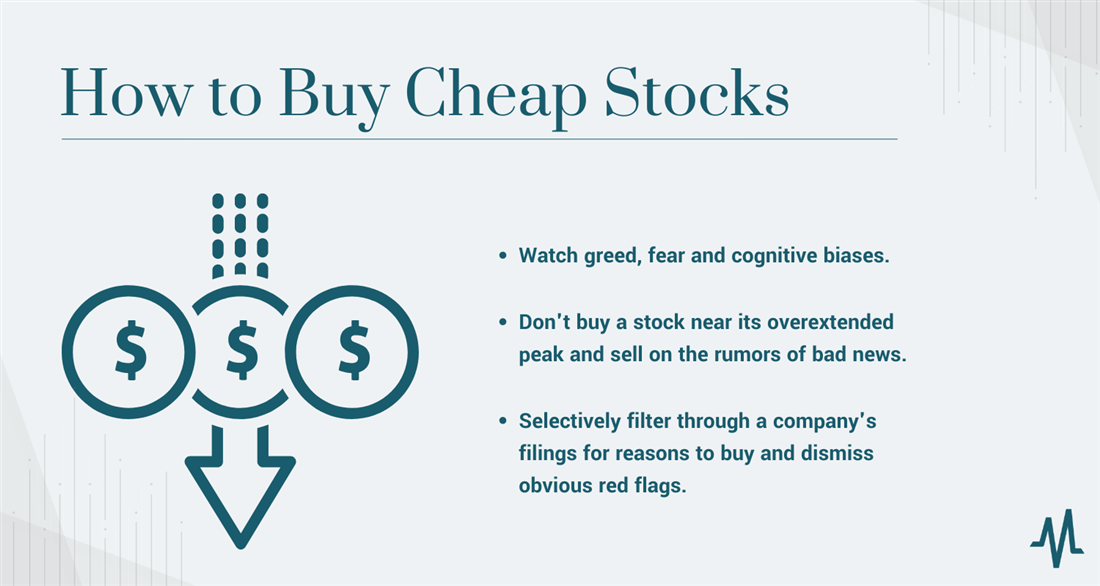
Best Stocks Under $10.00 for 2021

A common mistake among novice investors is confusing an undervalued stock with a cheap stock. When a stock trades under $5 (often called penny stocks), it can be easy for an investor to understand why the stock carries such a low price. But when a stock trades below $10, a little more research is required. This is particularly true when the broader market is in a sell-off. Before attempting to buy stocks under 10 dollars, there are some important things to know.

SHOULD I BUY STOCKS UNDER $10?

The simple answer is “Of course you should.” A common fallacy among even the most experienced investors is failing to understand the difference between a stock that is cheap and one that is undervalued. It’s an interesting aspect of human psychology. A stock that is trading at $200 could decline by 25% and investors will swoop in to buy it “on sale”. But if a $12 stock drops 20% it becomes untouchable.

The problem with this approach is it assumes “high price good, low price bad.” And in fairness, that can be true. And you should not read another word of this article without internalizing this simple truth. Many stocks that trade under $10 do so because they present obvious and fundamentally problematic issues that are suppressing their growth.

So the first thing I would say to investors looking to buy stocks under $10 is be sure you’re ready, and able, to do some research. Simply throwing your hard-earned money at a stock because you’ve heard the mantra “buy low, sell high” is foolish.

But the same can be said of investing in any stock. And if you’re reading this article, I hope you already understand that stocks over time can be an excellent and sound investment. Stock prices, no matter the price, can fluctuate wildly. But over time, investing in stocks has proven to be the most reliable path to reaching your financial goals.

And the simple truth is that a stock that is trading under $10 can offer you the ability to make huge gains. But that is, if you know what to look for. Fortunately, in this article, we’ve done a lot of that research for you.

But there is one caveat about investing in stocks under $10. This should only make up a small portion of the stock portion of your portfolio. The majority of your investment in equities (another name for stocks) should focus on solid, stable companies. And depending on your investment style, you should look for companies that pay a dividend.

You should also not invest in stocks under $10 to replace money you have set aside in bonds or cash. This should be money that you are already investing in the market.

HOW IS A COMPANY’S SHARE PRICE CALCULATED?

If you’re a more experienced investor this is just a basic review. But if you’re a relatively new investor this may help answer a lot of questions.

To understand why buying stocks under $10 can come with an elevated risk you need to understand how a company’s stock price is calculated. There are two data points to look for.

The first is a company’s market capitalization (or market cap). That is a rough estimation of how much a company is worth. The second number is the number of outstanding shares (also called shares outstanding – the meaning is the same). This is, as the name suggests, the number of common shares available to be bought.

To calculate a company’s stock price, you divide the company’s current market capitalization by its number of outstanding shares.

Here’s an example that keeps the math easy. A stock that is valued at $100 million and has 1 million outstanding shares has a share price of $100. But a stock that is valued at $100 million and has 100 million outstanding shares has a share price of $10.

The important thing to take away from that example is a stock’s price does not necessarily reflect the market value of the company.

Now here’s a real world example. On March 27, General Electric (NYSE:GE) had a market cap of $66.37 billion. The company had 8.74 billion outstanding shares. When you divide the market cap by the outstanding shares you get 7.59.

66.37/8.74 = 7.59

This means at that moment, one share of GE stock was valued at $7.59.

WHY DO COMPANIES ISSUE SHARES?

Remember earlier when looked at the example of two companies that were both valued at $100 million. Why would one company have 100 million shares available and the other only 1 million?

First of all, if you’re asking that question good for you. You’re on your way to being a sound investor. But understanding the answer is equally important. So let’s go back to the basics so you understand why companies issue shares.

Companies issue shares as a way to raise money that they don’t have to pay back. This is because, unlike a loan where a company borrows money from a financial institution or hedge fund, shares are bought and sold by other investors. That’s why it’s an investment, right? An investor is giving the company money (in the form of share purchases) in return for the chance that the share price will go higher. This means the value of the company will rise.

So in the earlier example, the company that only has 1 million shares outstanding has a higher demand for its stock. Therefore, if all things are equal (i.e. the market cap of the two companies are the same), that company’s stock will be more valuable.

WHAT ARE THE REWARDS OF STOCKS UNDER $10?

The reward of buying stocks under $10 is the opportunity for growth. If you can buy 1000 shares of a stock that is trading at $8, you would only need the stock to increase in value by $8 to double your investment. If you were

That, however, is easier said than done. And many investors have seen that $8,000 investment evaporate as they bought shares of a falling knife. Still, if investors can find the right stock, stocks under $10 are one of the best ways to capture a significant gain without a large investment.

That brings up a second point. Stocks under $10 are more accessible for investors without a lot of money to put into the market. Robinhood and other trading apps are designed on this principle. If you only have a small amount of money to invest, you don’t have to put all your eggs in one basket. In practical terms, and investor with $10,000 to invest could only buy about five shares of Amazon (NASDAQ:AMZN). But they could buy over 150 shares of Lovesac (NASDAQ:LOVE), a furniture retailer that is currently trading below $7 a share.

This also makes stocks under $10 a great option for diversification. Not only can you look at different sectors, but you can also dabble in international stocks.

WHAT ARE THE RISKS OF STOCKS UNDER $10?

One of the risks of buying a stock that is priced under $10 is the risk of share dilution. Generally, the number of outstanding shares is driven by simple supply and demand. A company that issues a solid earnings report, or comes out with a new product, etc. will see their outstanding shares decline because there will be more buyers than sellers. In other words, the stock is harder to buy. If an investor wants to buy it, a seller will demand a higher price to let their shares go. And when there are more sellers than buyers, there will be a higher number of outstanding shares. In other words, sellers have to accept a lower price for the shares they purchased to entice a buyer to buy.

However, when a company gets into financial trouble, it becomes difficult for them to get loans. Think of your personal finances. If you are looking to finance a car or a house, banks want to make sure you have enough available cash on a monthly basis so you can make the payment.

It’s no different for a company. When a company has limited free cash flow (FCF), they are seen as a credit risk. This simply means lenders believe there is a high probability that the company will default on the loan.

When this happens, one strategy they may execute is to issue more shares. This almost always dilutes the value of the existing shares, which in turn drives the price down further.

Issuing new shares is different from a stock split. A company that offers a stock split is simply trying to make its stock less expensive for retail (individual) investors. But when a company issues a split, they are giving current shareholders more shares at a lower price (e.g. an investor that owned 100 shares at $40 now owns 200 shares at $20).

Another risk with buying stocks under $10 includes the risk of increased competition. Young startup companies often have a first mover advantage. Because they are creating a new market, they have no competition and have no price pressure. However, as more competitors enter the market, a company may face pressure both on the price they charge and their profit margin. If the company is slow to adapt to the competition, their stock price may sink to extremely low levels.

Yet another risk to buying stocks under $10 is that they may be in a cyclical industry. A retailer may see their stock spike during the holiday season as investors anticipate greater revenue and profit. However, for the remainder of the year, the company may not be able to sustain that revenue. That’s another reason the stock may sink.

A final risk to consider is the stock is what it is, a low- to no-growth stock. If you look at the price history of a stock, it may just trade in a specific range. In that case, a stock under $10 may still be a worthwhile investment if it pays a nice dividend.

WHAT ARE THE BEST STOCKS UNDER $10?

If you’ve followed this article and understand both the pros and cons of stocks under $10, let’s take a look at how you can put that information to work in the middle of one of the greatest stock sell-off’s in history.

On the one hand, there are a number of quality companies that have seen their share price reach uncomfortably low levels. But some of these stocks are in industries like hospitality that have been particularly affected by the coronavirus. And while these stocks are generally perceived to see increased, pent-up demand once the coronavirus threat recedes, it may be some time before this increased demand shows up in the stock price.

Stocks Under 10 Dollars

Value investing opportunities do exist—if you're looking in the right places. Putting together a list of the best stocks under $10.00 requires investors to do their homework. At a price of under $10, these companies are not penny stocks. In fact many companies have a large market cap. But just because a stock is trading for a low price doesn’t make it a great value.

One of the biggest assets an investor can have is time. If you’ve done your due diligence and believe in the overall financial health and direction of the company, buying stocks under $10 can be very profitable. If you have the time and patience to hold the stock through many economic cycles, here are some stocks to consider.


ORBCOMM logo

#1 - ORBCOMM

NASDAQ:ORBC
Stock Price: $7.37 (-$0.22)
PE Ratio: -26.32
Market Cap: $582.85 million
Average Trading Volume: 1.47 million shares
Consensus Rating: Buy (4 Buy Ratings, 0 Hold Ratings, 0 Sell Ratings)
Consensus Price Target: $9.65 (30.9% Upside)
ORBCOMM Inc. provides Internet of Things solutions in the United States, South America, Japan, Europe, and internationally. The company offers network connectivity, devices, device management, and web reporting applications that are designed to track, monitor, control, and enhance security for various assets, such as trailers, trucks, rail cars, sea containers, power generators, fluid tanks, marine vessels, diesel or electric powered generators, oil and gas wells, pipeline monitoring equipment, irrigation control systems, and utility meters in transportation and supply chain, heavy equipment, fixed asset monitoring, and maritime industries, as well as for governments. It also provides satellite automatic identification service data services for vessel navigation and to enhance maritime safety for government and commercial customers; and vehicle fleet management, as well as in-cab and fleet vehicle solutions using various network platforms, including its own constellation of low-Earth orbit satellites and accompanying ground infrastructure, as well as terrestrial-based cellular communication services through reseller agreements with various cellular wireless providers. In addition, the company offers customer solutions utilizing additional satellite network service options through service agreements with third party mobile satellite providers; and resells service using the two-way Inmarsat plc satellite network to provide higher bandwidth. It markets and sells its products and services directly to original equipment manufacturers, government customers, and end-users, as well as indirectly through market channel partners and affiliates. ORBCOMM Inc. was founded in 2001 and is headquartered in Rochelle Park, New Jersey.
Teranga Gold logo

#2 - Teranga Gold

OTCMKTS:TGCDF
Stock Price: $9.75
Average Trading Volume: 22,890 shares
Consensus Rating: Buy (7 Buy Ratings, 0 Hold Ratings, 0 Sell Ratings)
Consensus Price Target: $17.75 (82.1% Upside)
Teranga Gold Corporation engages in the exploration, development, production, and sale of gold in West Africa. The company's flagship project is the Sabodala gold mine covering an area of 291 square kilometers mine license and 629 square kilometers exploration land package located in the Republic of Senegal. The company was incorporated in 2010 and is headquartered in Toronto, Canada.
Viking Therapeutics logo

#3 - Viking Therapeutics

NASDAQ:VKTX
Stock Price: $6.35 (+$0.06)
PE Ratio: -12.96
Market Cap: $470.75 million
Average Trading Volume: 1.52 million shares
Consensus Rating: Buy (10 Buy Ratings, 0 Hold Ratings, 0 Sell Ratings)
Consensus Price Target: $16.44 (159.0% Upside)
Viking Therapeutics, Inc., a clinical-stage biopharmaceutical company, focuses on the development of novel therapies for metabolic and endocrine disorders. Its lead drug candidate is VK2809, an orally available tissue and receptor-subtype selective agonist of the thyroid hormone receptor beta (TRÃ), which is in Phase IIb clinical trials to treat patients with biopsy-confirmed non-alcoholic steatohepatitis, as well as NAFLD. The company also develops VK5211, an orally available non-steroidal selective androgen receptor modulator that is in Phase II clinical trials for the treatment of patients recovering from non-elective hip fracture surgery; VK0612, an orally available Phase IIb-ready drug candidate for type 2 diabetes; and VK0214, an orally available tissue and receptor-subtype selective agonist of the TRÃ for X-linked adrenoleukodystrophy. Viking Therapeutics, Inc. was incorporated in 2012 and is headquartered in San Diego, California.
CymaBay Therapeutics logo

#4 - CymaBay Therapeutics

NASDAQ:CBAY
Stock Price: $5.01 (-$0.01)
PE Ratio: -5.33
Market Cap: $345.12 million
Average Trading Volume: 1.25 million shares
Consensus Rating: Buy (12 Buy Ratings, 0 Hold Ratings, 0 Sell Ratings)
Consensus Price Target: $12.77 (154.9% Upside)
CymaBay Therapeutics, Inc., a clinical-stage biopharmaceutical company, focuses on developing and providing therapies to treat liver and other chronic diseases. Its lead product candidate is seladelpar (MBX-8025), a selective agonist of peroxisome proliferator activated receptor delta, which has completed Phase II clinical study for the treatments of primary biliary cholangitis and sclerosing cholangitis, as well as patients with nonalcoholic steatohepatitis. The company also develops MBX-2982, a selective orally-active G protein-coupled receptor agonist that interacts with bioactive lipids known to stimulate glucose-dependent insulin secretion for the treatment of gut/liver disease. Its preclinical stage product candidate is CB-001, a G protein-coupled receptor for omega-3 fatty acids, such as docosahexaenoic acid for the treatment of gut/liver disease. It has development and licensing agreement with Janssen Pharmaceuticals, Inc. to develop and discover undisclosed metabolic disease target agonists for the treatment of type 2 diabetes and other disorders; and a license agreement with DiaTex, Inc. to develop and commercialize therapeutic products comprising halofenate and its enantiomers, derivatives, and analogs for the treatment of diseases. The company was formerly known as Metabolex, Inc. CymaBay Therapeutics, Inc. was incorporated in 1988 and is headquartered in Newark, California.
Fortress Biotech logo

#5 - Fortress Biotech

NASDAQ:FBIO
Stock Price: $4.18 (-$0.03)
PE Ratio: -4.92
Market Cap: $391.68 million
Average Trading Volume: 945,307 shares
Consensus Rating: Buy (5 Buy Ratings, 0 Hold Ratings, 0 Sell Ratings)
Consensus Price Target: $10.55 (152.4% Upside)
Fortress Biotech, Inc. develops and commercializes pharmaceutical and biotechnology products. The company markets dermatology products, such as Targadox for acne; Exelderm cream for ringworm and jock itch symptoms; Ceracade for dry skin conditions; Luxamend for dressing and managing wounds; Ximino to treat inflammatory lesions of severe acne vulgaris. It also develops MB-107, a gene therapy for X-linked severe combined immunodeficiency; CAEL-101, a Phase Ia/Ib trial product that reduces amyloid deposits in the tissues and organs; MB-102, a chimeric antigen receptor engineered T-cell (CAR T) program for acute myeloid leukemia; MB-106, a CAR T program for B cell non-Hodgkin lymphoma; and CS1 CAR T for multiple myeloma and light chain amyloidosis. In addition, the company develops MB-101 for Glioblastoma multiform (GBM); MB-103 for GBM, and breast cancer and brain metastases; MB 108 for GBM; MB-105 for prostate and pancreatic cancers; intravenous Tramadol for post-operative pain; CK-101 that is in Phase I/II clinical trial for treating patients with EGFR mutation-positive non-small cell lung cancer; Cosibelimab for metastatic cancer; Triplex, a Phase I study recombinant modified vaccinia ankara viral vector vaccine; ConVax, a recombinant modified vaccinia ankara viral vector vaccine; CEVA-101 for traumatic brain injury; CEVA-D, a bioreactor device that enhances the anti-inflammatory potency of bone marrow-derived cells; AVTS-001, an adeno-associated virus gene therapy; CUTX-101, a copper histidinate injection for the treatment of Menkes disease; CK-103 for metastatic solid tumor cancers; CK-302 for oncology indications; and CK-303 to treat renal cell carcinoma. It has collaboration arrangements with universities, research institutes, and pharmaceutical companies. The company was formerly known as Coronado Biosciences, Inc. and changed its name to Fortress Biotech, Inc. in April 2015. Fortress Biotech, Inc. was founded in 2006 and is based in New York, New York.
Kadmon logo

#6 - Kadmon

NASDAQ:KDMN
Stock Price: $4.24 (-$0.04)
PE Ratio: -7.07
Market Cap: $728.50 million
Average Trading Volume: 3.83 million shares
Consensus Rating: Buy (5 Buy Ratings, 0 Hold Ratings, 0 Sell Ratings)
Consensus Price Target: $14.00 (230.2% Upside)
Kadmon Holdings, Inc., a biopharmaceutical company, discovers, develops, and commercializes small molecules and biologics primarily for the treatment of inflammatory and fibrotic diseases. Its lead product candidates include KD025, an orally administered selective inhibitor of the rho-associated coiled-coil kinase 2, which is in Phase II clinical trial for the treatment of chronic graft-versus-host and fibrotic diseases; KD045, an oral inhibitor of ROCK for the treatment of fibrotic diseases; and KD033, an anti-PD-L1/IL-15 fusion protein for the treatment of cancer. The company also engages in developing Tesevatinib to treat autosomal dominant polycystic kidney disease; ribavirin, a nucleoside Inhibitor to treat hepatitis; and CLOVIQUE, a trientine hydrochloride capsules for the treatment of Wilson's disease. Kadmon Holdings, Inc. has strategic collaborations and license agreements with Nano Terra, Inc. and Dyax Corp. The company was founded in 2010 and is headquartered in New York, New York.
LiveXLive Media logo

#7 - LiveXLive Media

NASDAQ:LIVX
Stock Price: $5.31 (+$0.58)
PE Ratio: -9.16
Market Cap: $400.79 million
Average Trading Volume: 1.18 million shares
Consensus Rating: Buy (5 Buy Ratings, 0 Hold Ratings, 0 Sell Ratings)
Consensus Price Target: $6.29 (18.5% Upside)
LiveXLive Media, Inc., a digital media company, engages in the acquisition, distribution, and monetization of live music, Internet radio, podcasting, and music-related streaming and video content. It operates LiveXLive, a live music streaming platform; and Slacker Radio, a streaming music service, as well as produces original music-related content. The company also produces, edits, curates, and streams live music events through broadband transmission over the Internet and satellite networks to its users; provides digital Internet radio and music services to users online and through original equipment manufacturers on a white label basis; and offers ancillary products and services, such as regulatory and post-implementation support services. In addition, it offers an application that provides access to live events, audio streams, original episodic content, podcasts, video on demand, real-time livestreams, and social sharing of content. The company was formerly known as Loton, Corp. and changed its name to LiveXLive Media, Inc. in August 2017. LiveXLive Media, Inc. was founded in 2009 and is headquartered in West Hollywood, California.
Aquestive Therapeutics logo

#8 - Aquestive Therapeutics

NASDAQ:AQST
Stock Price: $4.98 (-$0.19)
PE Ratio: -3.25
Market Cap: $167.43 million
Average Trading Volume: 963,068 shares
Consensus Rating: Buy (5 Buy Ratings, 0 Hold Ratings, 0 Sell Ratings)
Consensus Price Target: $15.67 (214.6% Upside)
Aquestive Therapeutics, Inc., a pharmaceutical company, focuses on identifying, developing, and commercializing various products to address unmet medical needs in the United States and internationally. The company markets Sympazan, an oral soluble film formulation of clobazam for the treatment of lennox-gastaut syndrome; Suboxone, a sublingual film formulation of buprenorphine and naloxone for the treatment of opioid dependence; and Zuplenz, an oral soluble film formulation of ondansetron for the treatment of nausea and vomiting associated with chemotherapy and post-operative recovery. The company's proprietary product candidates comprise Libervant, a buccal soluble film formulation of diazepam for the treatment of seizures; and Exservan, an oral soluble film formulation of riluzole for the treatment of amyotrophic lateral sclerosis. Its proprietary pipeline of complex molecule products include AQST-108, a sublingual film formulation of epinephrine for the treatment of anaphylaxis; and AQST-305, a sublingual film formulation of octreotide for the treatment of acromegaly. Further, the company develops KYNMOBI, a sublingual film formulation of apomorphine for the treatment of episodic off-periods in Parkinson's disease. Aquestive Therapeutics, Inc. was incorporated in 2004 and is headquartered in Warren, New Jersey.
PDS Biotechnology logo

#9 - PDS Biotechnology

NASDAQ:PDSB
Stock Price: $5.35 (-$0.02)
PE Ratio: -3.24
Market Cap: $119.10 million
Average Trading Volume: 1.82 million shares
Consensus Rating: Buy (5 Buy Ratings, 0 Hold Ratings, 0 Sell Ratings)
Consensus Price Target: $7.62 (42.4% Upside)
PDS Biotechnology Corporation, a clinical-stage biopharmaceutical company, focuses on developing multifunctional cancer immunotherapies. Its lead product candidate is PDS0101 (HPV16), which is in Phase II clinical trial, a first line treatment for the recurrent/metastatic head and neck cancer, human papillomavirus associated malignancies, and cervical cancer. The company is also developing various product candidates, which are in preclinical trials, including PDS0102 (TARP) for treating prostate and breast cancers; PDS0103 (MUC-1) for ovarian, colorectal, lung, and breast cancers; and PDS0104 (TRP2) for the treatment of melanoma. The company has a collaboration agreement with Merck & Co. to combine PDS0101 with Keytruda, a checkpoint inhibitor to treat human papillomavirus positive recurrent or metastatic head and neck cancer; and an agreement with Farmacore Biotechnology for the development of Versamune-based vaccine to prevent COVID-19 infection. The company is based in Princeton, New Jersey.
OncoSec Medical logo

#10 - OncoSec Medical

NASDAQ:ONCS
Stock Price: $5.70 (+$0.06)
PE Ratio: -2.32
Market Cap: $211.81 million
Average Trading Volume: 321,486 shares
Consensus Rating: Buy (5 Buy Ratings, 0 Hold Ratings, 0 Sell Ratings)
Consensus Price Target: $7.90 (38.6% Upside)
OncoSec Medical Incorporated, a biotechnology company, focuses on developing cytokine-based intratumoral immunotherapies to stimulate the body's immune system to target and attack cancer. The company's lead product candidate is ImmunoPulse IL-12 that uses electroporation device to deliver a DNA-encoded interleukin-12 (IL-12) for reversing the immunosuppressive microenvironment in the treated tumor. It is also developing ImmunoPulse IL-12 with KEYTRUDA in patients with advanced melanoma that is in Phase IIb clinical trials (KEYNOTE-695) and advanced or metastatic triple negative breast cancer (TNBC), which is in Phase II clinical trials (KEYNOTE-890); ImmunoPulse IL-12 and KEYTRUDA in patients with advanced or metastatic melanoma that has completed Phase II clinical trials; and ImmunoPulse IL-12 monotherapy in patients with metastatic melanoma, which has completed the Phase II clinical trials. In addition, the company is developing monotherapy biomarker study in patients with advanced or metastatic TNBC that has completed the Phase II clinical trials; and new DNA-encoded therapeutic candidates and tumor indications to treat deep visceral lesions, such as liver, lung, bladder, pancreatic, and other visceral lesions. It has clinical trial collaborations with Merck & Co., Inc. and its subsidiary in connection with the KEYNOTE-695 and KEYNOTE-890 studies; a research collaboration with Duke University's Center for Applied Therapeutics to evaluate enhanced IL-12 DNA-plasmid; a research collaboration with Roswell Park Comprehensive Cancer Center to evaluate the use of Roswell Park's intravital microscopy and enhanced IL-12 DNA-plasmid; and collaboration with Providence Cancer Institute. The company was formerly known as NetVentory Solutions Inc. and changed its name to OncoSec Medical Incorporated in March 2011. OncoSec Medical Incorporated was founded in 2008 and is headquartered in Pennington, New Jersey.
Applied Genetic Technologies logo

#11 - Applied Genetic Technologies

NASDAQ:AGTC
Stock Price: $5.87 (-$0.17)
PE Ratio: -2.76
Market Cap: $250.40 million
Average Trading Volume: 3.45 million shares
Consensus Rating: Buy (6 Buy Ratings, 0 Hold Ratings, 0 Sell Ratings)
Consensus Price Target: $17.58 (199.5% Upside)
Applied Genetic Technologies Corporation, a clinical-stage biotechnology company, develops transformational genetic therapies for patients suffering from rare and debilitating diseases. The company's advanced product candidates consist of three ophthalmology development programs across two targets, including X-linked retinitis pigmentosa, which has completed Phase I/II clinical trials; and achromatopsia that is in Phase I/II clinical trials. It is also developing an optogenetic product candidate for the patients with advanced retinal disease. In addition, the company has initiated one preclinical program in otology; and three preclinical programs in targeting central nervous system disorders, including frontotemporal dementia, amyotrophic lateral sclerosis, and adrenoleukodystrophy. It has collaboration agreements with Synpromics Limited; University of Florida; Bionic Sight, LLC; and Otonomy, Inc. Applied Genetic Technologies Corporation was founded in 1999 and is headquartered in Alachua, Florida.
Concert Pharmaceuticals logo

#12 - Concert Pharmaceuticals

NASDAQ:CNCE
Stock Price: $6.02 (-$0.14)
PE Ratio: -2.34
Market Cap: $193.69 million
Average Trading Volume: 492,553 shares
Consensus Rating: Buy (5 Buy Ratings, 0 Hold Ratings, 0 Sell Ratings)
Consensus Price Target: $21.00 (248.8% Upside)
Concert Pharmaceuticals, Inc. operates as a clinical stage biopharmaceutical company. The company discovers and develops novel small molecule drugs for the treatment of autoimmune and central nervous system disorders. Its product candidates include CTP-543, which is in Phase III clinical trials for the treatment of alopecia areata; CTP-692, a selective deuterium-modified analog of the endogenous amino acid and D-serine that is in Phase II trials for the treatment of schizophrenia; and AVP-786, a combination of deudextromethorphan and an ultra-low dose of quinidine, which is in Phase 3 clinical trials for the treatment of neurologic and psychiatric disorders, including agitation associated with Alzheimer's disease. The company has strategic collaborations with Avanir Pharmaceuticals, Inc.; Cipla Technologies; Processa Pharmaceuticals; and Jazz Pharmaceuticals, Inc. Concert Pharmaceuticals was founded in 2006 and is headquartered in Lexington, Massachusetts.
Oaktree Specialty Lending logo

#13 - Oaktree Specialty Lending

NASDAQ:OCSL
Stock Price: $6.22 (+$0.02)
PE Ratio: 22.21
Market Cap: $876.78 million
Average Trading Volume: 658,218 shares
P/E Ratio: 22.2
Dividend Yield: 7.74 %
Consensus Rating: Buy (5 Buy Ratings, 0 Hold Ratings, 0 Sell Ratings)
Consensus Price Target: $5.50 (-11.6% Upside)
Oaktree Specialty Lending Corporation is a business development company specializing in investments in middle market, bridge financing, first and second lien debt financing, mezzanine debt, senior and junior secured debt, expansions, sponsor-led acquisitions, and management buyouts in small and mid-sized companies. The fund seeks to invest in education services, business services, retail and consumer, healthcare, manufacturing, food and restaurants, construction and engineering, and media and advertising sectors. It invests between $5 million to $75 million principally in the form of one-stop, first lien, and second lien debt investments, which may include an equity co-investment component in companies with enterprise value between $20 million and $150 million and EBITDA between $3 million and $50 million. The fund has a hold size of up to $75 million and may underwrite transactions up to $100 million. It primarily invests in North America. The fund seeks to be a lead investor in its portfolio companies.
Aspen Group logo

#14 - Aspen Group

NASDAQ:ASPU
Stock Price: $6.43 (-$0.35)
PE Ratio: -16.92
Market Cap: $160.43 million
Average Trading Volume: 205,153 shares
Consensus Rating: Buy (4 Buy Ratings, 0 Hold Ratings, 0 Sell Ratings)
Consensus Price Target: $14.20 (120.8% Upside)
Aspen Group, Inc., an education technology company, provides online higher education services in the United States. The company offers certificate programs; and associate, bachelor's, master's, and doctoral degree programs in a range of areas, including nursing and health sciences, business and technology, arts and sciences, education, and professional and extended studies. As of April 30, 2020, it had 11,444 degree-seeking students enrolled. The company was founded in 1987 and is based in New York, New York.
Carrols Restaurant Group logo

#15 - Carrols Restaurant Group

NASDAQ:TAST
Stock Price: $6.66 (-$0.34)
PE Ratio: -14.80
Market Cap: $355.22 million
Average Trading Volume: 412,197 shares
Consensus Rating: Buy (6 Buy Ratings, 0 Hold Ratings, 0 Sell Ratings)
Consensus Price Target: $7.50 (12.6% Upside)
Carrols Restaurant Group, Inc., through its subsidiaries, operates as a restaurant company in the United States. The company operates as a Burger King franchisee. As of December 29, 2019, it had, as franchisee, 1,036 Burger King restaurants located in 23 Northeastern, Midwestern, and Southeastern states; and 65 Popeyes restaurants in seven Southeastern states. The company was founded in 1960 and is headquartered in Syracuse, New York.
Sientra logo

#16 - Sientra

NASDAQ:SIEN
Stock Price: $7.40 (+$0.15)
PE Ratio: -4.16
Market Cap: $423.82 million
Average Trading Volume: 1.25 million shares
Consensus Rating: Buy (5 Buy Ratings, 0 Hold Ratings, 0 Sell Ratings)
Consensus Price Target: $8.75 (18.2% Upside)
Sientra, Inc., a medical aesthetics company, develops and sells medical aesthetics products to plastic surgeons in the United States. It operates through two segments, Breast Products and miraDry. The company offers silicone gel breast implants for use in breast augmentation and breast reconstruction procedures; breast tissue expanders; and scar management products under the Sientra, AlloX2, OPUS, Dermaspan, Softspan, and BIOCORNEUM brand names. It also provides body contouring products; facial and nasal implants; saline filled breast implant sizers; and miraDry System, a non-surgical device for the permanent reduction of underarm sweat, odor, and hair of all colors. The company was formerly known as Juliet Medical, Inc. and changed its name to Sientra, Inc. in April 2007. Sientra, Inc. was incorporated in 2003 and is headquartered in Santa Barbara, California.
VYNE Therapeutics logo

#17 - VYNE Therapeutics

NASDAQ:VYNE
Stock Price: $7.43 (-$0.39)
PE Ratio: -1.98
Market Cap: $381.37 million
Average Trading Volume: 2.64 million shares
Consensus Rating: Buy (6 Buy Ratings, 0 Hold Ratings, 0 Sell Ratings)
Consensus Price Target: $19.50 (162.4% Upside)
VYNE Therapeutics Inc., a pharmaceutical company, focuses on developing and commercializing various therapeutics for dermatology. It offers AMZEEQ, a topical minocycline used for the treatment of inflammatory lesions of non-nodular moderate-to-severe acne vulgaris in patients 9 years of age and older. The company is also developing FMX103, which is in Phase III clinical trials for the treatment of moderate-to-severe papulopustular rosacea in adults; and FCD105, a topical combination foam that is in Phase II clinical trials for the treatment of moderate-to-severe acne vulgaris. In addition, it is developing Serlopitant, a once-daily oral NK1 receptor antagonist, used as a treatment option for pruritus associated with prurigo nodularis. The company was formerly known as Menlo Therapeutics Inc. and changed its name to VYNE Therapeutics Inc. in September 2020. VYNE Therapeutics Inc. was founded in 2003 and is headquartered in Bridgewater, New Jersey.
ZIX logo

#18 - ZIX

NASDAQ:ZIXI
Stock Price: $7.84 (-$0.04)
PE Ratio: -25.29
Market Cap: $447.59 million
Average Trading Volume: 703,268 shares
Consensus Rating: Buy (6 Buy Ratings, 0 Hold Ratings, 0 Sell Ratings)
Consensus Price Target: $10.00 (27.6% Upside)
Zix Corporation provides email encryption, data loss prevention (DLP), threat protection, and archiving for the secure exchange of email in the United States. The company offers Advanced Email Threat Protection, a cloud-based service that defends organizations from zero-day malware, ransomware, phishing, CEO fraud, W-2 phishing attacks, spams, and viruses in email; Information Archive, a cloud-based email retention solution that enables user retrieval, compliance, and e-discovery; Email Encryption Service that allows a user to send encrypted email to any email user anywhere and on any Internet-enabled device; cloud-based cybersecurity solutions; and e-signatures and secure file sharing solutions. It serves the healthcare, financial services, insurance, and government sectors. Zix Corporation sells its services through a direct sales force; and a network of resellers and other distribution partners. The company was formerly known as ZixIt Corporation and changed its name to Zix Corporation in 2002. Zix Corporation was incorporated in 1988 and is headquartered in Dallas, Texas.
Precigen logo

#19 - Precigen

NASDAQ:PGEN
Stock Price: $8.21 (+$0.02)
PE Ratio: -4.37
Market Cap: $1.69 billion
Average Trading Volume: 1.86 million shares
Consensus Rating: Buy (5 Buy Ratings, 0 Hold Ratings, 0 Sell Ratings)
Consensus Price Target: $12.80 (55.9% Upside)
Precigen, Inc. discovers and develops the next generation of gene and cellular therapies in the United States. It also provides disease-modifying therapeutics; genetically engineered swine for regenerative medicine applications; proprietary methane bioconversion platform that turns natural gas into energy and chemical products; and reproductive and embryo transfer technologies. In addition, the company offers UltraVector platform that incorporates advanced DNA construction technologies and computational models to design and assemble genetic components into complex gene expression programs; mbIL15, a gene that enhances functional characteristics of immune cells; Sleeping Beauty, a non-viral transposon/transposase system; AttSite recombinases, which breaks and rejoins DNA at specific sequences; AdenoVerse technology platform, a library of engineered adenovector serotypes; and L. lactis is a food-grade bacterium. Additionally, it provides RheoSwitch inducible gene switch that provides quantitative dose-proportionate regulation of the amount and timing of target protein expression; kill switches to selectively eliminate cell therapies in vivo; UltraCAR-T platform for the treatment of cancer; AdenoVerse Immunotherapy, a library of proprietary adenovectors for the gene delivery; and ActoBiotics platform, genetically modified bacteria that deliver proteins and peptides at mucosal sites. Precigen, Inc. has collaboration and license agreements with ZIOPHARM Oncology, Inc.; Ares Trading S.A.; Oragenics, Inc.; Intrexon T1D Partners, LLC; Intrexon Energy Partners, LLC; Intrexon Energy Partners II, LLC; Fibrocell Science, Inc.; OvaXon, LLC; S & I Ophthalmic, LLC; Harvest start-up entities; and Surterra Holdings, Inc. The company was formerly known as Intrexon Corporation and changed its name to Precigen, Inc. in January 2020. Precigen, Inc. was founded in 1998 and is based in Germantown, Maryland.
MannKind logo

#20 - MannKind

NASDAQ:MNKD
Stock Price: $3.67 (-$0.05)
PE Ratio: -17.48
Market Cap: $907.07 million
Average Trading Volume: 6.26 million shares
Consensus Rating: Buy (5 Buy Ratings, 0 Hold Ratings, 0 Sell Ratings)
Consensus Price Target: $6.63 (80.5% Upside)
MannKind Corporation, a biopharmaceutical company, focuses on the development and commercialization of inhaled therapeutic products for endocrine and orphan lung diseases in the United States. The company offers Afrezza, an inhaled insulin used to improve glycemic control in adults with diabetes. It also promotes Thyquidity used for the treatment of hypothyroidism. The company has a license and collaboration agreement with United Therapeutics Corporation for the development and commercialization of a dry powder formulation of Treprostinil (Tyvaso DPI) used for the treatment of pulmonary arterial hypertension. MannKind Corporation was incorporated in 1991 and is headquartered in Westlake Village, California.

MarketBeat - Stock Market News and Research Tools logo

MarketBeat empowers individual investors to make better trading decisions by providing real-time financial data and objective market analysis. Whether you’re looking for analyst ratings, corporate buybacks, dividends, earnings, economic reports, financials, insider trades, IPOs, SEC filings or stock splits, MarketBeat has the objective information you need to analyze any stock. Learn more.

MarketBeat is accredited by the Better Business Bureau

© American Consumer News, LLC dba MarketBeat® 2010-2021. All rights reserved.
326 E 8th St #105, Sioux Falls, SD 57103 | [email protected] | (844) 978-6257
MarketBeat does not provide financial advice and does not issue recommendations or offers to buy stock or sell any security. Learn more.

Our Accessibility Statement
Do Not Sell My Information

© 2021 Market data provided is at least 10-minutes delayed and hosted by Barchart Solutions. Information is provided 'as-is' and solely for informational purposes, not for trading purposes or advice, and is delayed. To see all exchange delays and terms of use please see disclaimer. Fundamental company data provided by Zacks Investment Research. As a bonus to opt-ing into our email newsletters, you will also get a free subscription to the Liberty Through Wealth e-newsletter. You can opt out at any time.

Enter your email address below to receive a concise daily summary of analysts' upgrades, downgrades and new coverage with MarketBeat.com's FREE daily email newsletter.