Array Technologies NASDAQ: ARRY and Shoals Technologies Group NASDAQ: SHLS agreed on Nov. 4 to combine in an all-stock merger. On paper, Array is buying Shoals. In practice, Shoals shareholders will control the combined company.
Array stock jumped nearly 15% following the merger announcement. However, not all of that move was due to the deal. Solar stocks rallied broadly that day after Democrats won control of Congress in the midterm elections. Array delivered its Q3 2026 earnings report the same morning with mixed results.
Shoals shares also climbed more than 8% following the announcement. The company also reported Q3 2026 earnings that beat both revenue and earnings estimates.
How the Array-Shoals Merger Will Work
Array Technologies Today
ARRY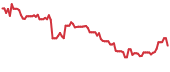
Array Technologies
$5.64 +0.34 (+6.32%) As of 01:07 PM Eastern
This is a fair market value price provided by Massive. Learn more. - 52-Week Range
- $3.09
▼
$12.23 - Price Target
- $8.20
Array will serve as the legal acquirer. A newly formed Array subsidiary will merge into Shoals, making Shoals a wholly owned subsidiary of Array. The deal values Shoals at roughly $1.32 billion.
Each Shoals share converts into 1.6931 Array shares. Because the ratio is fixed, the value Shoals holders receive will move with Array's stock price until closing. The deal is designed to be tax-free, and no appraisal rights are available.
After closing, Shoals shareholders will own about 65% of the combined company. Array shareholders will keep the remaining 35%. On a fully diluted basis, the split is 64.5% and 35.5%.
The leadership structure follows the ownership. Shoals CEO Brandon Moss will run the combined company. Array CEO Kevin Hostetler will become a special advisor. Brad Forth, who already chairs both boards, will chair the new board. He did not take part in either board's vote.
The 10-member board will include four independent directors from each company, plus Forth and Moss. The company plans a new name and ticker, so the ARRY symbol is likely to disappear.
What the Deal Means for Array and Shoals Shareholders
Shoals Technologies Group Today
SHLS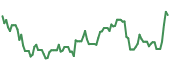
Shoals Technologies Group
$9.44 +0.46 (+5.06%) As of 01:08 PM Eastern
This is a fair market value price provided by Massive. Learn more. - 52-Week Range
- $5.43
▼
$13.18 - P/E Ratio
- 41.07
- Price Target
- $10.88
Shoals shareholders get control. They hold the majority stake, their CEO leads, and they gain access to Array's international footprint.
Array shareholders get no premium and no cash. Instead, they receive a smaller slice of a larger, more diversified business. Their bet rests on cost savings, a cleaner balance sheet, and opportunities to sell more products to existing customers.
The strategic logic is simple. Array makes solar trackers and mounting systems. Shoals makes the electrical hardware that carries power across a solar site.
Customers have usually bought these through separate supply chains. That said, only about 20% of projects served by either company from January 2025 through September 2026 used products from both.
The 2027 Targets Come With Caveats
The companies estimate pro forma 2027 revenue of $2.2 billion to $2.4 billion. They also estimate adjusted EBITDA of $410 million to $480 million.
Investors should focus on the word estimate. These are preliminary, indicative numbers, not actual results. They also include expected year-one synergies. The companies say the ranges only illustrate the combined company's potential scale. No auditor has reviewed them.
Those built-in synergies matter. Year-one cost savings are expected to add about $20 million of run-rate EBITDA. Cross-selling should add roughly $15 million more, from revenue that has not been won yet.
Longer term, management targets more than $100 million in annual synergies within three years. Shoals also brings about $1.6 billion of tax amortization and $237 million of net operating losses. Those could help keep cash taxes low for several years.
The Combined Company Looks Beyond Solar
The deal is also about growth beyond solar. Management says the combined scale opens doors in battery storage and data center infrastructure. Shoals already sells electrical systems into both markets.
For now, this expansion is more ambition than plan. The companies have not given separate revenue or margin targets for either market. Investors should treat it as potential upside, not part of the base case.
How the Merger Addresses Array's Preferred Stock
The deal also tackles a long-standing drag on Array: its Series A perpetual preferred stock. Its dividends have been a steady drain on cash.
Array will redeem $317.5 million of the preferred, measured by liquidation preference, at a discount. About $161.3 million goes within 90 days of closing at 93% of face value. The remaining $156.3 million follows in three installments through 2030 at 96%.
The companies say the deal cuts preferred distributions by nearly $100 million over five years. About $348.7 million of preferred would remain after the first redemption. Its dividend rate steps up by 300 basis points five years after closing. That gives management a strong reason to retire the rest early.
Pro forma leverage is expected at 2.6x adjusted EBITDA at year-end 2026. Management targets below 2x by the end of 2027.
What Needs to Happen Before the Deal Closes
The companies expect the deal to close in the first quarter of 2027. Several steps come first:
Shareholders of both companies must approve it.
The Hart-Scott-Rodino antitrust waiting period must expire or be terminated.
Array's Form S-4 registration statement must become effective.
Nasdaq must approve the new shares for listing.
What Could Delay or Derail the Merger
The shareholder votes carry the most risk. Array holders are giving up control without a premium, so their vote is the one to watch.
A competing bid could also complicate the merger. Either board can change its recommendation under certain conditions, but terminating the agreement could trigger a breakup fee. Depending on the circumstances, Shoals could owe Array $40.3 million, while Array could owe Shoals $22.2 million.
Antitrust risk looks modest because the product lines mostly complement each other. Still, either side can walk away if the deal has not closed by May 4, 2027. That date extends to Nov. 4, 2027, if only antitrust or listing approval is outstanding.
The preferred stock agreement adds one more wrinkle. Blackstone can terminate the preferred stock agreement if certain merger terms change without the required investor consent. That would leave the original, costlier terms in place if the merger still proceeds.
Before you consider Array Technologies, you'll want to hear this.
MarketBeat keeps track of Wall Street's top-rated and best performing research analysts and the stocks they recommend to their clients on a daily basis. MarketBeat has identified the five stocks that top analysts are quietly whispering to their clients to buy now before the broader market catches on... and Array Technologies wasn't on the list.
While Array Technologies currently has a Hold rating among analysts, top-rated analysts believe these five stocks are better buys.
View The Five Stocks Here
Tesla, Nvidia, and Google helped shape the last era of market growth, but the next wave could come from a new group of companies. Inside this report, you’ll find 7 stocks that could play a major role in the next tech-driven market boom.
Get This Free Report
Continue following MarketBeat
Add MarketBeat as your preferred source on Google to see our latest stories in your feed.
