Global technology infrastructure requires immense amounts of physical hardware. In October, South Korea reported a 93.7% year-over-year (YOY) increase in total exports, reaching about $115.28 billion. This marks the fastest export expansion for the country since January 1974.
A deeper look at the data reveals the primary catalyst: semiconductor sector shipments, which rose 259.4% YOY. As data center operators build out computational capabilities, demand for high-bandwidth memory and advanced processing components remains strong. Even after adjusting for differences in working days (the Chuseok holiday resulted in more working days in October 2026 than in October 2025), South Korea's daily exports surged 76%.
Yet, the markets present a completely different picture.
The iShares MSCI South Korea ETF NYSEARCA: EWY, the primary ETF tracking South Korean equities, fell by just over 20% between Oct. 5 and Nov. 4. When macroeconomic data point to extraordinary demand but the corresponding equity vehicle trades lower, it creates a unique opportunity for investors willing to look beyond the sell-off. The question is whether the decline reflects a temporary disconnect or legitimate concerns about the sustainability of the AI hardware boom.
Downloading the Data: A Look at the Macro Disconnect
iShares MSCI South Korea ETF Today
EWY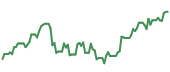
iShares MSCI South Korea ETF
$136.85 -15.27 (-10.04%) As of 12:54 PM Eastern
This is a fair market value price provided by Massive. Learn more. - 52-Week Range
- $86.90
▼
$220.89 - Dividend Yield
- 1.48%
- Assets Under Management
- $22.68 billion
The EWY tracks the MSCI Korea 25/50 Index, providing exposure to South Korea's largest publicly traded companies across technology, financials, automotive manufacturing, and other industries.
But despite that diversification, the fund remains heavily concentrated in technology.
With approximately $22.7 billion in assets under management, EWY allocates nearly 57% of its portfolio to the technology sector, with semiconductors alone accounting for about 28%.
That concentration makes the ETF particularly sensitive to the performance of South Korea's chipmakers, helping explain why shifts in semiconductor sentiment can outweigh strength elsewhere in the economy.
Over the past year, the fund delivered a return close to 60%, but the recent decline has erased a substantial portion of its earlier advance.
To understand whether EWY's recent decline represents an investment opportunity, investors need to examine the businesses driving the index and the durability of their semiconductor demand.
iShares MSCI South Korea ETF (EWY) Price Chart for Thursday, November, 5, 2026
Processing Power: Securing Revenue Through the Decade
SK hynix Today
$125.76 -17.31 (-12.10%) As of 12:54 PM Eastern
This is a fair market value price provided by Massive. Learn more. - 52-Week Range
- $122.50
▼
$199.87 - Dividend Yield
- 0.06%
- P/E Ratio
- 9.99
- Price Target
- $247.80
South Korea's technology sector relies heavily on two global memory manufacturers. SK Hynix NASDAQ: SKHY and Samsung Electronics OTCMKTS: SSNLF collectively represent nearly 48% of the iShares MSCI South Korea ETF. Their operational health largely dictates the fund's trajectory.
Recent corporate earnings highlight a sustained capital expenditure cycle across the industry.
In late October, Samsung Electronics reported a record operating profit of approximately 107.4 trillion won (about $80 billion) for the third quarter. Management noted that their high-bandwidth memory allocation for 2027 is already sold out.
SK Hynix offered similar forward visibility, confirming its advanced memory and DRAM output is effectively committed through 2029.
When manufacturers secure production capacity years in advance, it provides a measurable baseline for future revenue streams. It removes much of the guesswork from financial modeling. To support this physical infrastructure, the South Korean government recently proposed a budget of roughly 21.3 trillion won (about $15.6 billion) specifically for semiconductor, physical AI, and AI data center initiatives. This proposed investment nearly doubles the previous year's allocation. Sovereign backing could help offset some of the heavy capital costs associated with expanding semiconductor manufacturing capacity.
Beyond Smartphones: A New Era for Memory Cycles
To understand current export numbers, investors need to see how memory fits into the broader technology landscape. Advanced computing requires immense amounts of data processing. Graphics processing units handle the computations, but those processors cannot function without high-bandwidth memory. This memory type lets data move quickly between processors and memory, helping prevent performance bottlenecks. South Korea operates as the primary global hub for this hardware.
Because SK Hynix and Samsung Electronics control most of the global market share for these advanced memory architectures, corporate investment in processing hardware often flows directly through South Korea's export economy.
This capital expenditure cycle differs from previous memory cycles. Historically, memory was a commodity product tied to consumer electronics like smartphones and personal computers. Those cycles were relatively short and prone to sudden supply gluts.
Today, enterprise-level infrastructure build-outs are becoming a more important source of demand. These are multi-year commitments from large technology companies. The fact that major manufacturers have secured substantial future orders suggests a more predictable demand outlook, although the industry remains vulnerable to oversupply and changes in customer spending.
Risk Management: Firewalls and Hedging
A look at institutional positioning provides some clarity on the recent EFT weakness. Short interest in the fund recently increased by about 57.33% between Sept. 30 and Oct. 15, bringing the total to roughly 20.96 million shares. This represents approximately 14.7% of shares outstanding as of Oct. 15.
Alongside the rise in short interest, options flow data from late October revealed bearish trading activity. Large investors sold over 111,000 contracts of a bear call spread on EWY, suggesting that some market participants were positioning for limited near-term upside. However, such activity does not necessarily indicate institutional hedging. Portfolio managers with substantial year-to-date gains often use options and short selling to protect positions against short-term market rotations or macroeconomic uncertainties, such as shifting global trade policies. Other investors may simply be betting on additional declines.
This activity could indicate that the recent pullback stems from risk management rather than a deterioration of the underlying business models. The memory makers are still moving their inventory, but investors may be reassessing semiconductor valuations, future AI spending, and the potential for another memory supply cycle.
System Update: Watching for Consolidation in South Korean Tech
Investors evaluating international equities often look for markets with clear structural advantages. South Korea currently holds a dominant position in a critical hardware supply chain. The underlying companies are generating substantial profits and have secured greater revenue visibility through multiyear supply commitments.
The iShares MSCI South Korea ETF offers a straightforward way to gain exposure to this macroeconomic trend without buying foreign shares directly. The fund also offers a dividend yield around 1.46%, providing a small income component while the broader market processes recent selling pressure.
While short-term technical headwinds and increased bearish positioning have weighed on investor sentiment, the reality of 93.7% export growth remains intact. The question is whether those fundamentals are strong enough to justify current valuations and withstand a potential slowdown in AI infrastructure spending.
Investors may want to monitor the fund for signs of technical consolidation alongside continued earnings growth and stable memory prices. If the recent selling pressure subsides, the underlying strength of the semiconductor order book could become the primary catalyst for a recovery in South Korean equities.
Before you consider iShares MSCI South Korea ETF, you'll want to hear this.
MarketBeat keeps track of Wall Street's top-rated and best performing research analysts and the stocks they recommend to their clients on a daily basis. MarketBeat has identified the five stocks that top analysts are quietly whispering to their clients to buy now before the broader market catches on... and iShares MSCI South Korea ETF wasn't on the list.
While iShares MSCI South Korea ETF currently has a Hold rating among analysts, top-rated analysts believe these five stocks are better buys.
View The Five Stocks Here
The space race is growing fast, and you don’t have to have gotten in early on SpaceX to profit. This report shows seven space stocks you can buy today that may grow as rockets, satellites, defense, space internet, and new space technology become more important.
Get This Free Report
Continue following MarketBeat
Add MarketBeat as your preferred source on Google to see our latest stories in your feed.

