The Manufacturers Life Insurance Company purchased a new stake in Expand Energy Corporation (NASDAQ:EXE - Free Report) during the 2nd quarter, according to the company in its most recent disclosure with the Securities and Exchange Commission. The firm purchased 245,914 shares of the company's stock, valued at approximately $22,424,000. The Manufacturers Life Insurance Company owned approximately 0.11% of Expand Energy as of its most recent filing with the Securities and Exchange Commission.
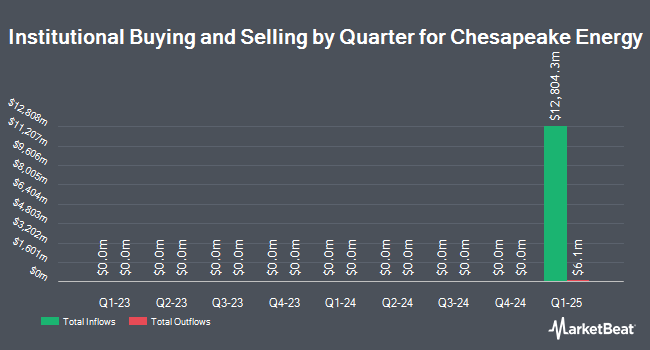
Other large investors have also added to or reduced their stakes in the company. Atlantic Union Bankshares Corp raised its stake in shares of Expand Energy by 74.6% in the fourth quarter. Atlantic Union Bankshares Corp now owns 234 shares of the company's stock worth $26,000 after purchasing an additional 100 shares during the last quarter. SJS Investment Consulting Inc. boosted its position in shares of Expand Energy by 379.6% during the first quarter. SJS Investment Consulting Inc. now owns 259 shares of the company's stock valued at $28,000 after buying an additional 205 shares during the last quarter. University of Texas Texas AM Investment Management Co. purchased a new position in shares of Expand Energy during the fourth quarter valued at approximately $30,000. Ascentis Independent Advisors bought a new stake in Expand Energy during the first quarter worth $32,000. Finally, Eastern Bank bought a new stake in Expand Energy during the second quarter worth $27,000. Institutional investors own 97.93% of the company's stock.
Insider Buying and Selling at Expand Energy
In related news, CEO Michael Wichterich bought 1,000 shares of Expand Energy stock in a transaction dated Friday, June 12th. The stock was purchased at an average cost of $88.90 per share, with a total value of $88,900.00. Following the transaction, the chief executive officer directly owned 85,498 shares of the company's stock, valued at approximately $7,600,772.20. The trade was a 1.18% increase in their ownership of the stock. The acquisition was disclosed in a document filed with the Securities & Exchange Commission, which is accessible through the SEC website. 0.22% of the stock is owned by corporate insiders.
Expand Energy Trading Up 1.5%
NASDAQ EXE opened at $98.00 on Friday. The stock has a market capitalization of $22.69 billion, a price-to-earnings ratio of 8.46 and a beta of 0.34. Expand Energy Corporation has a one year low of $84.99 and a one year high of $126.62. The company has a debt-to-equity ratio of 0.19, a current ratio of 0.96 and a quick ratio of 0.96. The business's fifty day moving average is $91.62 and its 200-day moving average is $97.14.
Expand Energy (NASDAQ:EXE - Get Free Report) last posted its quarterly earnings results on Tuesday, July 28th. The company reported $1.33 earnings per share for the quarter, beating the consensus estimate of $1.13 by $0.20. Expand Energy had a net margin of 20.46% and a return on equity of 10.33%. The company had revenue of $2.96 billion during the quarter, compared to analyst estimates of $3.05 billion. Equities research analysts predict that Expand Energy Corporation will post 8.84 EPS for the current year.
Expand Energy Dividend Announcement
The business also recently announced a quarterly dividend, which will be paid on Thursday, September 3rd. Shareholders of record on Thursday, August 13th will be paid a $0.575 dividend. This represents a $2.30 dividend on an annualized basis and a yield of 2.3%. The ex-dividend date is Thursday, August 13th. Expand Energy's payout ratio is presently 19.86%.
Wall Street Analyst Weigh In
EXE has been the topic of several recent analyst reports. Citigroup dropped their price objective on Expand Energy from $125.00 to $115.00 and set a "buy" rating on the stock in a research note on Thursday, July 9th. The Goldman Sachs Group upped their target price on shares of Expand Energy from $99.00 to $113.00 and gave the stock a "buy" rating in a research note on Wednesday. Truist Financial increased their target price on shares of Expand Energy from $117.00 to $121.00 and gave the company a "buy" rating in a report on Thursday, July 30th. Barclays dropped their price target on shares of Expand Energy from $110.00 to $107.00 and set an "equal weight" rating on the stock in a research report on Monday, August 17th. Finally, Benchmark cut their price target on shares of Expand Energy from $124.00 to $109.00 and set a "buy" rating on the stock in a report on Wednesday, August 12th. Two investment analysts have rated the stock with a Strong Buy rating, fourteen have issued a Buy rating and six have assigned a Hold rating to the stock. According to MarketBeat.com, the stock has a consensus rating of "Moderate Buy" and a consensus target price of $126.89.
View Our Latest Stock Analysis on EXE
Expand Energy Profile
(
Free Report)
Expand Energy Corporation is an independent natural gas producer principally in the United States. Expand Energy Corporation, formerly known as Chesapeake Energy Corporation, is based in OKLAHOMA CITY.
Read More
This instant news alert was generated by narrative science technology and financial data from MarketBeat in order to provide readers with the fastest reporting and unbiased coverage. Please send any questions or comments about this story to contact@marketbeat.com.

Continue following MarketBeat
Add MarketBeat as your preferred source on Google to see our latest stories in your feed.
Before you consider Expand Energy, you'll want to hear this.
MarketBeat keeps track of Wall Street's top-rated and best performing research analysts and the stocks they recommend to their clients on a daily basis. MarketBeat has identified the five stocks that top analysts are quietly whispering to their clients to buy now before the broader market catches on... and Expand Energy wasn't on the list.
While Expand Energy currently has a Moderate Buy rating among analysts, top-rated analysts believe these five stocks are better buys.
View The Five Stocks Here
Discover the 10 Best High-Yield Dividend Stocks for 2026 and secure reliable income in uncertain markets. Download the report now to identify top dividend payers and avoid common yield traps.
Get This Free Report
Like this article? Share it with a colleague.
Link copied to clipboard.
