FedEx Today
$324.19 +7.36 (+2.32%) As of 09:56 AM Eastern
This is a fair market value price provided by Massive. Learn more. - 52-Week Range
- $172.88
▼
$345.36 - Dividend Yield
- 1.51%
- P/E Ratio
- 17.54
- Price Target
- $348.83
shares fell more than 5% following its
Q4 fiscal year 2026 (FY2026) earnings release, raising the question of whether it’s time to get out of this recovery story or lean harder into the trade. The risk is a weaker-than-expected earnings outlook.
The offset is that the consensus estimate may not fully reflect the impact of the FedEx Freight spin-off and the improvements in cash flow it will bring, as well as potential caution in the guidance. FedEx Freight’s spin was completed in early June, setting the stage for accelerated growth and margin strength in upcoming quarters.
FedEx Enters Transition Year on Strong Footing
FedEx ended fiscal 2026 on an upbeat note, with fourth-quarter revenue rising 12.5% year over year (YOY) to $25 billion, ahead of analyst expectations. Revenue outpaced MarketBeat’s reported consensus by more than 385 basis points (bps), on strength in both segments. FedEx Freight grew by 4.8% in its last quarter in the portfolio, led by a much stronger 13.7% increase in FedEx Express. Express revenue grew on the strength of volume and pricing, both domestically and abroad, and is expected to remain strong in the upcoming quarters.
Margin news is also good. The company’s GAAP margin contracted on one-offs, many of which were non-cash or tied to spin-off activities. However, the adjusted margin was much better, reflecting structural improvements over the last year, leaving adjusted profits up on a YOY basis. The critical detail is that Q4 adjusted earnings topped $6.31, up 390 bps YOY, and 36 cents ahead of the consensus forecast.
Guidance is the sticking point as the transition year begins, but investors should note that the transition includes a shift in reporting periods. FedEx’s fiscal year will now align with the calendar year, leaving the next seven months as a standalone period. As it stands, management expects spin-off-linked momentum to continue through calendar year-end and calendar year revenue growth in the range of 11%. Earnings are forecast with an adjusted midpoint of $17.50, well below the consensus, but the calendar-year forecast and fiscal-year period estimates may not be aligned.
FedEx Improves Capacity to Return Capital
Among the impacts of the FedEx Freight spin-off is an improvement in the capacity to return capital. Not only did the spin involve a multibillion-dollar cash injection into the parent’s balance sheet, but it also improved the cash flow outlook in the long term. FedEx’s new war chest is specifically earmarked for debt reduction, aggressive share buybacks, and other tax-efficient measures to boost shareholder value.
As it stands, the company returned approximately $2.2 billion on a trailing 12-month (TTM) basis and is already on track to grow the figure over the coming 12 months. The company increased its dividend payout by 5% for the transition period and is likely to increase it again in the upcoming 2027 fiscal year. Buybacks amounted to 1.4% of the share count, TTM.
Analysts Caution Sets Up Dip-Buying Opportunity
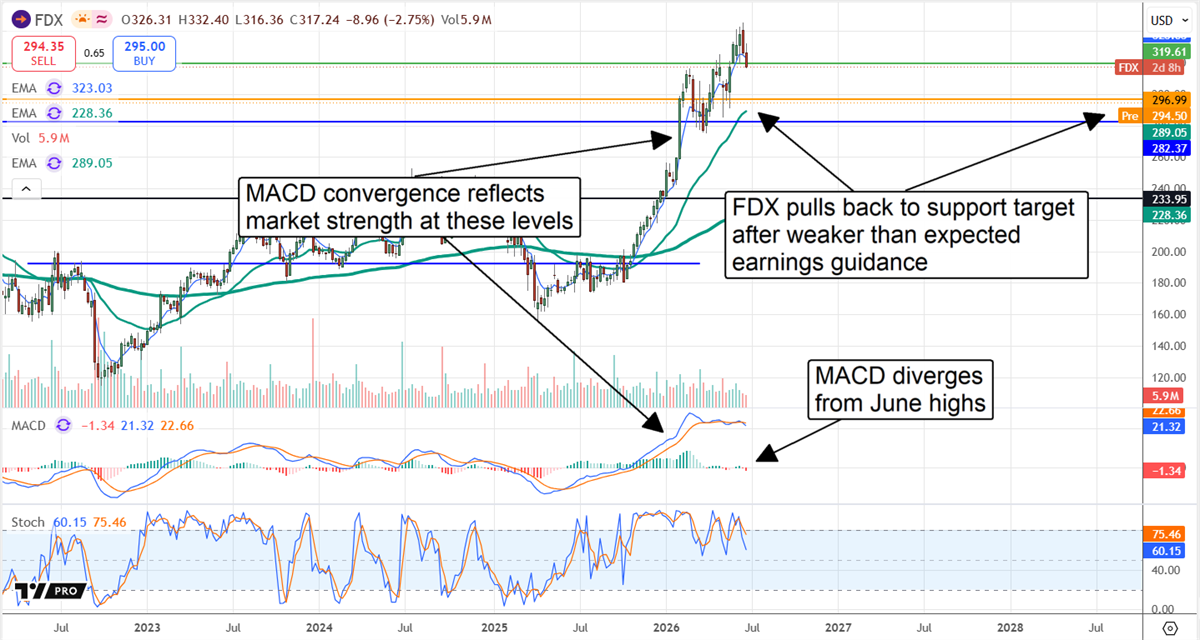
Analysts responded cautiously to the news, praising the FQ4 strength but expressing concern over the guidance. The likely outcome is that they limit upside potential over the coming months while maintaining the bullish posture indicated by the data. MarketBeat tracks 29 analysts with current ratings; they rate the stock a Moderate Buy, with a 62% Buy-side bias within the group. The consensus estimate suggests a 12% upside relative to the pre-release closing price, as of late June, but investors should expect that to fall as the summer progresses.
FedEx MarketRank™ Stock Analysis
- Overall MarketRank™
- 92nd Percentile
- Analyst Rating
- Moderate Buy
- Upside/Downside
- 11.0% Upside
- Short Interest Level
- Healthy
- Dividend Strength
- Moderate
- News Sentiment
- 0.44

- Insider Trading
- Selling Shares
- Proj. Earnings Growth
- 5.19%
See Full AnalysisThe catalyst for higher share prices will come later this year. Subsequent earnings results will likely reflect the company’s strengths and internal improvements, as well as signs of what the upcoming year will bring. While quarterly reports can provide the necessary market impetus, it will be the calendar-year 2027 guidance that matters most. Assuming growth, margin strength, cash flow, and capital returns, the stock price uptrend will likely continue.
Institutions are among the reasons the FDX pullback looks like a buy-the-dip opportunity. The group owns more than 85% of the stock and has been accumulating at a $2-to-$1 pace over the TTM period, sustaining a bullish balance in each quarter. The group will likely sustain the bullish balance, given the price discount and cash flow outlook, but may slow its pace until later in the year when new catalysts emerge.
Chart action reflects a market top, with the June highs offset by obvious and significant MACD divergence. The divergence reflects an underlying weakness, with prices above $320 setting the stage for a post-release price pullback. The question is how deeply the FDX market will pull back, and the floor may be near $280. The $280 level aligns with prior support and price action, with MACD at historically high levels, potentially a trigger point for institutions and other buy-and-hold investors.
Before you consider FedEx, you'll want to hear this.
MarketBeat keeps track of Wall Street's top-rated and best performing research analysts and the stocks they recommend to their clients on a daily basis. MarketBeat has identified the five stocks that top analysts are quietly whispering to their clients to buy now before the broader market catches on... and FedEx wasn't on the list.
While FedEx currently has a Moderate Buy rating among analysts, top-rated analysts believe these five stocks are better buys.
View The Five Stocks Here
Robotics and automation are rapidly becoming essential infrastructure across healthcare, manufacturing, logistics, and many other industries.
"Physical AI" is coming to the United States, and there are four ways that investors can gain exposure to this new robotics revolution. Plus, learn which seven companies are most positioned to benefit as intelligent robots enter the workforce.
Get This Free Report
Like this article? Share it with a colleague.
Link copied to clipboard.
