The S&P 500 may have hit a new all-time high this month, but that doesn’t necessarily mean consumers are feeling good about the economy. While consumer sentiment has rebounded from its historic lows, July retail sales data surprised to the downside at $763.6 billion, down 0.6% from the previous month. One data point doesn’t create a trend (and the number was still up 5% from July 2025), but it was the first month-over-month retail sales decline since October 2025, and investors have been watching retail sector earnings closely over the last week.
Walmart Inc. NASDAQ: WMT and Home Depot Inc. NYSE: HD were two bellwethers that reported this week, and both beat estimates and posted comp sales growth. But the market reaction couldn’t have been more different, and a deeper dive into the numbers shows that the dreaded K-shaped economy is still very much with us.
Walmart Earnings: High Traffic, Lower Tickets
Walmart dropped its fiscal Q2 2027 numbers before the market opened Aug. 20, and the stock was promptly smacked down 9% despite a top- and bottom-line beat. U.S. comps grew 2.6% in the period, the company added 96 basis points (bps) of gross margin, and raised full-year sales guidance. However, the headline numbers don’t tell the whole story.
Walmart Today
$105.99 +2.29 (+2.21%) As of 03:00 PM Eastern
This is a fair market value price provided by Massive. Learn more. - 52-Week Range
- $95.42
▼
$135.15 - Dividend Yield
- 0.93%
- P/E Ratio
- 38.26
- Price Target
- $131.88
The margin gains were boosted by $2.9 billion in tariff refunds, which the company plans to return to customers through price reductions. Management noted that 750 bps of operating income growth was attributable to tariff refunds, and that benefit will not be repeated in Q3.
But the real question mark in the numbers came from comps, which decelerated significantly from 4.1% and 4.6% in fiscal Q1 2027 and Q4 2026. Management blamed 125 bps of this decline on new drug regulations affecting pharmacy sales, but the real culprit appears to be a step down in transaction size, not volume.
Sam’s Club provides the clearest example: 4.4% comps ex-fuel, but a 2.5% ticket decline despite a 7% increase in transactions.
Consumers are trading down to value, which isn’t typically a sustainable way to build comps. Q3 operating income was guided to a range of 2% to 4%, so the headline guidance lacks teeth and helps explain why the stock dropped 9% after the release.
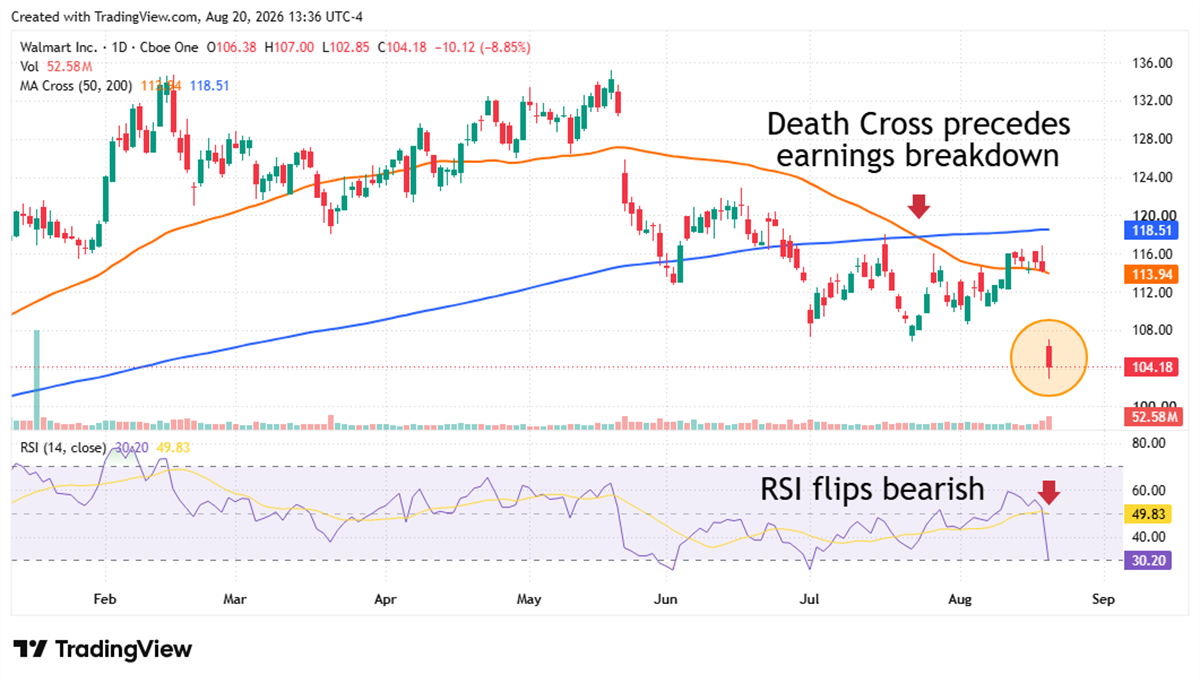
The stock took out the 50-day moving average on the day of the release, reversing momentum that had been building, as shown by the Relative Strength Index (RSI). But now the RSI has plunged to 30, which is typically the threshold at which a stock is considered oversold. This raises the question of how much downside is left.
Home Depot Earnings: Slower Traffic, Higher Tickets
Home Depot reported its fiscal Q2 2026 earnings on Aug, 18, and the market reaction was far more nuanced.
Home Depot Today
HD
Home Depot
$336.74 +1.13 (+0.34%) As of 03:00 PM Eastern
This is a fair market value price provided by Massive. Learn more. - 52-Week Range
- $289.10
▼
$426.75 - Dividend Yield
- 2.77%
- P/E Ratio
- 23.55
- Price Target
- $375.54
Another tariff refund-aided headline double beat with growing comps, but Home Depot’s 1.7% comp sales growth was its best number since Q3 2022. And the breakdown of those comps also offers another clue on consumer sentiment.
The 1.7% comp came with 2.8% ticket growth and a 1% decline in transaction volume. Big-ticket items continue to dominate sales; transactions over $1,000 grew 2.4% in the quarter, and average spend per trip rose from $90.01 to $92.50. Affordability continues to limit turnover in the housing market, but current homeowners have plenty of equity built up to fund renovations.
A smaller cohort of wealthier clients is carrying Home Depot’s comps, which likely explains why management chose to reaffirm Q3 2026 guidance rather than raise it after tariff refunds boosted profitability.
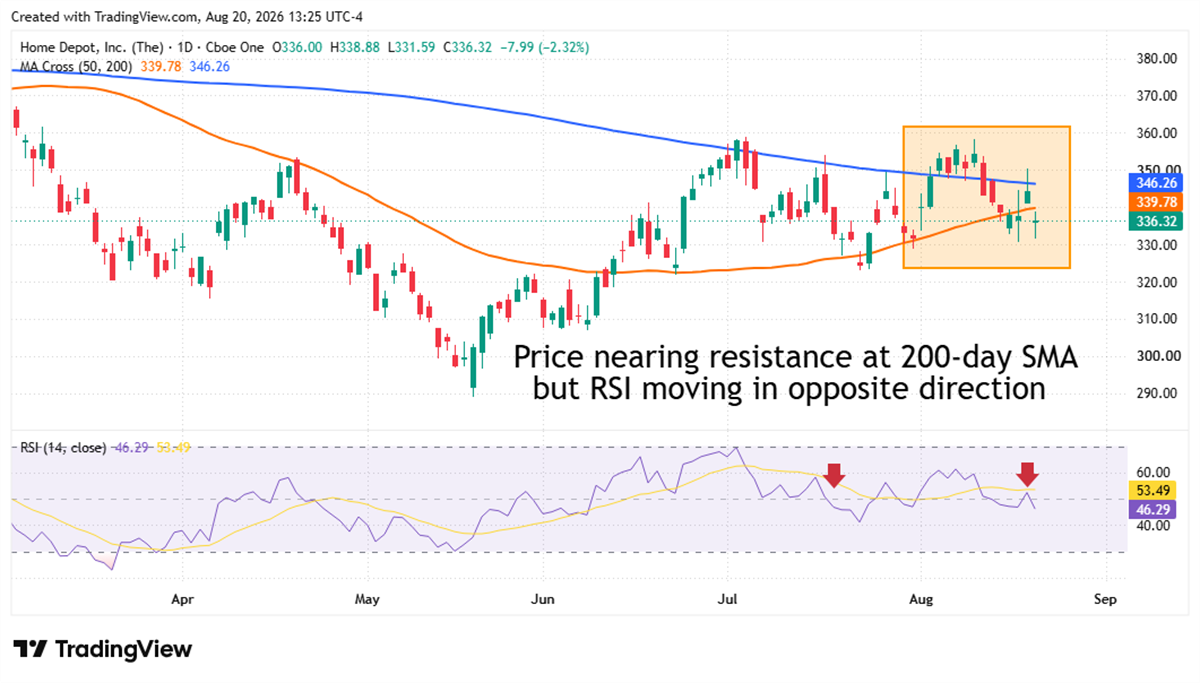
The stock rose slightly after the earnings release and is now locked in a tight range between the 50-day and 200-day moving averages. But RSI is trending below the bearish threshold, hinting that the momentum from the post-earnings pop will struggle to sustain itself.
Value Tradedowns and Big Ticket Spend Highlight Diverging Consumer Behavior
Earlier this month, U.S. Treasury Secretary Scott Bessent said he was “sick and tired” of hearing about the K-shaped economy. But unfortunately for Bessent, these earnings results show the K is likely to remain a talking point through the end of the year. Walmart’s comp sales growth is slowing despite booming traffic because consumers higher up the income ladder are now trading down for essentials and groceries. At the same time, equity-flush homeowners have plenty of capital to deploy for home improvement projects, while renters and DIY customers stay away.
Moving forward, investors should monitor a few sentiment-related factors. August retail sales numbers will be released on Sept. 16, which will include any revisions to the previous month. Walmart’s Q3 earnings will also be in the spotlight after its Q2 drawdown, and the market will watch whether tariff-aided price cuts increase spending per trip. For now, the K-shaped economy continues to inform sentiment and guide behavior, with lower-income households bearing the brunt of the tradeoffs.

Continue following MarketBeat
Add MarketBeat as your preferred source on Google to see our latest stories in your feed.
Before you consider Home Depot, you'll want to hear this.
MarketBeat keeps track of Wall Street's top-rated and best performing research analysts and the stocks they recommend to their clients on a daily basis. MarketBeat has identified the five stocks that top analysts are quietly whispering to their clients to buy now before the broader market catches on... and Home Depot wasn't on the list.
While Home Depot currently has a Moderate Buy rating among analysts, top-rated analysts believe these five stocks are better buys.
View The Five Stocks Here
The AI wave will soon hit public markets with Anthropic and OpenAI set to go public later this year. However, you don't have to wait to invest. This report shows seven AI stocks that you can buy today while the big model providers get ready to go public.
Get This Free Report
Like this article? Share it with a colleague.
Link copied to clipboard.
