The S&P 500 is set up for a great year, and there are still gains to come. Seasonally, Q4 is the strongest of the year, typically rising 80% of the time, and there are other factors in play suggesting this year will follow suit. To begin, the onset of Q4 marks the end of the typically volatile summer trading season. Smart-money investors who “sold in May and went away” are coming back and ready to get back into the market. While September is usually weak, rising only about 50% of the time, October usually marks a bottom, rising about 60% of the time, with November and December to do the heavy lifting. In the best years, the Santa Claus Rally caps the seasonal rally and keeps the market rising into the New Year.
Wicked Hot Earnings Growth Underpins This Rally
Earnings drive any market, and they are growing at a robust pace in 2026, with strength expected to continue through the year’s end. Coincidentally, JPMorgan Chase NYSE: JPM kicks off the Q3 reporting season in mid-October, coinciding with the seasonal bottom indicated by the data. As it stands, the Q2 results reflect a massive disconnection between the market and reality: fears are valid, but the facts are clear—the S&P 500 has hurdles, but profitability is on the rise.
S&P 500 earnings growth topped 50% in Q2, outperforming the consensus estimate by nearly 3000 basis points, and there is no reason to think growth is going to slow in the current quarter. The more likely scenario is that the S&P outperforms the mid-August consensus of about 27.5% by a wide margin and provides solid Q4 guidance.
Energy is driving the outperformance. High oil prices are boosting earnings, with some reporting about 150% year-over-year growth, such as Exxon Mobil NYSE: XOM. The caveat is that this is not an isolated event. Energy prices are still high, good for energy stocks, but the core driver is the AI boom, which is still accelerating. NVIDIA NASDAQ: NVDA, as the leader, posted 140% year-over-year non-GAAP earnings-per-share growth in its latest reported quarter, while revenue rose 85%; the earnings tailwind remains strong.
The FOMC Is Unlikely to Hike Rates
As scary as high energy prices and inflation are, the FOMC is unlikely to hike interest rates this year. Oil prices are a key driver of inflation, and the FOMC has little control over them. The best they can do is impair business activity with higher interest rates, hoping to curb oil demand, but they are unlikely to do that, given the economic data. The economy isn’t in danger, but the latest reads should give the committee pause.
Labor markets, the Fed's other mandate, are still expanding, but tepidly, and could easily tip into contraction. Retail sales figures are more alarming, having contracted unexpectedly in the June/July period. The more likely scenario is that the FOMC stands pat, adopting a wait-and-see posture, which is enough—stability is as good as a rate cut if it allows businesses and enterprises to advance their strategies as planned.
The AI Boom: It’s About to Boom Again
The AI Boom is the core driver of this market, led by NVIDIA and supported by an expanding ecosystem of tech companies. Within this, two fall catalysts stand out, starting with NVIDIA’s summer activity. The company not only cemented its pipeline but also derisked the outlook by securitizing its GPUs. The company removed risk from its own balance sheet while providing liquidity for its consumers—a brilliant move if ever there was one. More importantly, the earnings boost for many of the AI companies is back-ended. Last year’s spending, which was a hurdle, equates to next year’s revenue and earnings gains, which is a catalyst.
The second catalyst is Advanced Micro Devices NASDAQ: AMD. It is launching initial deliveries of the MI450 line and Helios rack systems this quarter and will usher in the inference age, providing inference-focused GPU capacity at lower cost. This is critical, as the inference infrastructure market is expected to grow rapidly and eventually surpass demand for model training. AMD’s forward outlook does not reflect this opportunity. Expect it to outperform, amplify the S&P 500 NVIDIA effect, and drive a bullish sentiment cycle for its stock and the broader ecosystem.
Market Breadth Is OK; Catalysts for Improvements Are in Play
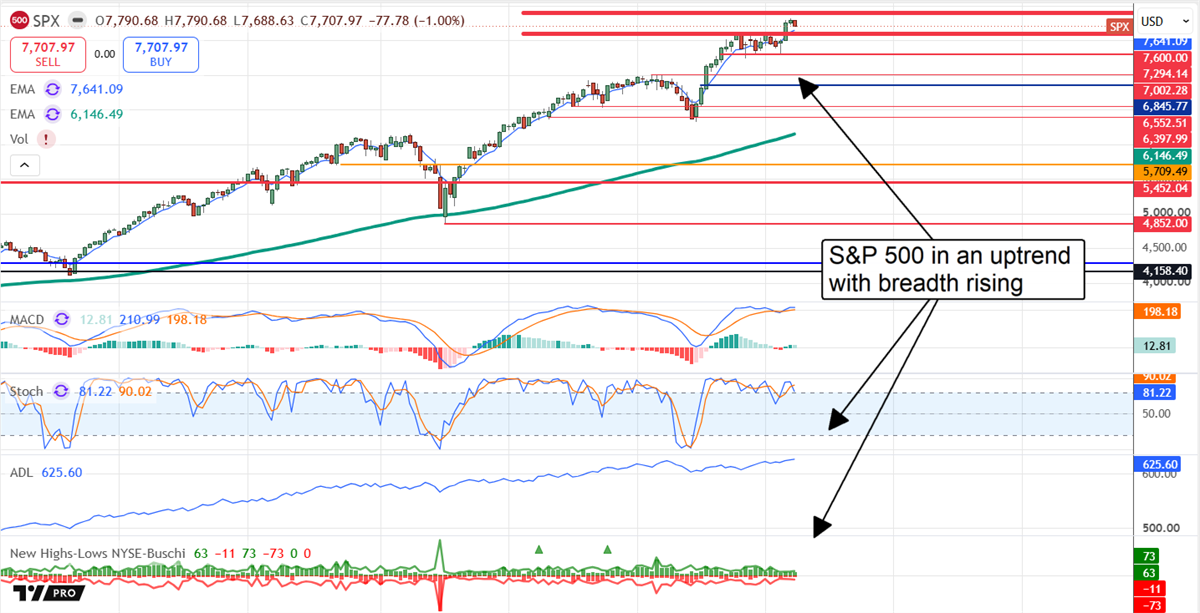
Market breadth is the final piece to this puzzle. The market breadth, as indicated by the Advanced/Decline Line and New Highs/New Lows index, is OK. It weakened somewhat over the summer but did not revert to indicate market distribution. As it stands, the indicators are trending higher, showing relative strength, with a bullish bias and catalysts at hand. The likely outcome is that breadth improves as the summer season rolls into early fall, adding lift to the indices broadly. Indices, as of late August, such as the S&P 500, Dow Jones Industrial Average, NASDAQ Composite, and Russell 2000, reflect uptrends and generally bullish conditions despite the summer swoon.
Before you consider SPDR S&P 500 ETF Trust, you'll want to hear this.
MarketBeat keeps track of Wall Street's top-rated and best performing research analysts and the stocks they recommend to their clients on a daily basis. MarketBeat has identified the five stocks that top analysts are quietly whispering to their clients to buy now before the broader market catches on... and SPDR S&P 500 ETF Trust wasn't on the list.
While SPDR S&P 500 ETF Trust currently has a Hold rating among analysts, top-rated analysts believe these five stocks are better buys.
View The Five Stocks Here
Tesla, Nvidia, and Google helped shape the last era of market growth, but the next wave could come from a new group of companies. Inside this report, you’ll find 7 stocks that could play a major role in the next tech-driven market boom.
Get This Free Report
Continue following MarketBeat
Add MarketBeat as your preferred source on Google to see our latest stories in your feed.
Like this article? Share it with a colleague.
Link copied to clipboard.
