The May Jobs report told a familiar story for investors in healthcare stocks. The sector added 35,200 positions last month, led by ambulatory health services at 25,700 and hospitals at 6,000. What makes this number meaningful is the consistency behind it. Healthcare has averaged roughly 38,000 new jobs per month over the past year, a pace that signals sustained demand for services, not a seasonal blip.
That demand has a direct translation to revenue for the right companies. Ambulatory services are growing because patients are being treated outside hospital walls more often. That benefits outpatient clinics, rehabilitation centers, and home care settings. Hospital hiring reflects a steadily rising inpatient census and procedure volume.
It’s another reminder that when it comes to macroeconomic data, the real story is almost always in the details. Follow where the jobs are being created, and you find the revenue growth. These three names sit at the intersection of where that growth is actually occurring.
UnitedHealth Group: Leveraging Growth in Healthcare Utilization
UnitedHealth Group Today
UNH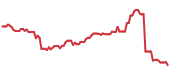
UnitedHealth Group
$409.45 -1.59 (-0.39%) As of 02:29 PM Eastern
This is a fair market value price provided by Massive. Learn more. - 52-Week Range
- $234.60
▼
$415.98 - Dividend Yield
- 2.16%
- P/E Ratio
- 30.92
- Price Target
- $407.17
More ambulatory visits and more managed care utilization equal more Optum touchpoints. That's the direct equation for UnitedHealth Group as healthcare employment, and—by extension—insured patient volume, continues to expand.
UnitedHealth Group NYSE: UNH sits at the center of the U.S. healthcare system as both its largest private insurer and one of its largest care delivery platforms. Rising demand for healthcare services flows through the business from multiple directions.
The operational narrative at UNH right now is a turnaround, and the healthcare jobs data provides a secular tailwind. That turnaround showed up in the company’s Q1 2026 results, which marked a period of stabilization after a difficult stretch. Revenue reached $111.7 billion, up 2% year-over-year, with UnitedHealthcare generating $86.3 billion and Optum contributing the remainder.
The medical benefit ratio improved to 83.9% from 84.8% a year ago, reflecting better cost management and reserve development. It’s further evidence that the medical cost pressures that plagued the managed care sector are beginning to normalize. To support that idea, management raised its full-year 2026 adjusted earnings per share (EPS) guidance to above $18.25 per share.
Optum Health, which runs value-based care practices and home health operations, including the Amedisys platform it acquired in 2025, directly benefits as the ambulatory workforce expands. More clinicians in the field means more capacity to serve more patients under value-based contracts, where utilization efficiency drives margins.
At 22x forward earnings, UNH is still trading at a slight premium to its historic average, but the valuation is getting better. Several analysts have raised their consensus price target well above the consensus price target of $407.17.
HCA Healthcare: A Direct Play on Rising Hospital Demand
When hospitals add jobs, they're adding capacity, which gets filled by patients. HCA Healthcare NYSE: HCA, the largest hospital operator in the United States, is about as direct a connection between healthcare employment trends and revenue as it gets. HCA's network currently spans 189 hospitals and approximately 2,600 ambulatory sites, giving it direct exposure to both inpatient and ambulatory demand.
HCA Healthcare Today
HCA
HCA Healthcare
$396.17 +6.20 (+1.59%) As of 02:29 PM Eastern
This is a fair market value price provided by Massive. Learn more. - 52-Week Range
- $330.00
▼
$556.52 - Dividend Yield
- 0.79%
- P/E Ratio
- 13.62
- Price Target
- $506.14
The company’s Q1 2026 earnings report confirmed the volume picture remains intact. Revenue reached $19.1 billion, up 4.3% year-over-year. Same-facility admissions grew 0.9%, and same-facility equivalent admissions, which include outpatient procedures, increased 1.3%. Revenue per equivalent admission rose 3.1%, driven by a favorable payer mix and negotiated commercial rate increases. Operating cash flow strengthened to $2 billion, a 22% jump from the prior-year quarter.
HCA Healthcare continues to invest in capacity, deploying $1.1 billion in capital expenditures during Q1 while simultaneously repurchasing $1.6 billion in shares. Yet, HCA is down over 16% in 2026 and well off its all-time high from February. Analysts have a consensus price target of $506.14, which is a gain of about 30% from its price as of this writing.
Encompass Health (EHC): The Post-Acute Play on the Outpatient Shift
The 25,700 ambulatory jobs added in May aren't just showing up at urgent care clinics. A significant portion reflects the growing demand for post-acute and rehabilitation care—patients discharged from hospitals who need structured recovery before returning home. That's the core business of Encompass Health NYSE: EHC, the largest owner and operator of inpatient rehabilitation hospitals in the United States.
Encompass Health Today
EHC
Encompass Health
$100.09 +0.73 (+0.74%) As of 02:29 PM Eastern
This is a fair market value price provided by Massive. Learn more. - 52-Week Range
- $92.77
▼
$127.99 - Dividend Yield
- 0.76%
- P/E Ratio
- 16.72
- Price Target
- $143.86
The company’s Q1 2026 earnings report was among the best in the company's recent history. Revenue grew 9% year-over-year to $1.59 billion. Adjusted EBITDA climbed 11.2%, and adjusted EPS surged 16.8%. Management raised full-year 2026 revenue guidance to a range of $6.375 billion to $6.47 billion. The discharge-to-community rate improved 50 basis points to 84.5%, and nurse turnover hit its lowest level since 2012. That's a tangible labor cost benefit in a sector where staffing has been a persistent headwind.
The demand backdrop is structural. The U.S. population continues to age; inpatient rehabilitation services remain undersupplied relative to demand. Plus, the shift away from skilled nursing facilities toward higher-quality rehabilitation settings creates a direct tailwind for EHC's model. The company is actively expanding, opening seven new hospitals in 2026 and adding 100 to 150 beds to existing facilities.
As of June 11, EHC is down about 4% in 2026. However, analysts give the stock a consensus Buy rating with a $143.86 price target that would be a gain of over 40%.
Before you consider UnitedHealth Group, you'll want to hear this.
MarketBeat keeps track of Wall Street's top-rated and best performing research analysts and the stocks they recommend to their clients on a daily basis. MarketBeat has identified the five stocks that top analysts are quietly whispering to their clients to buy now before the broader market catches on... and UnitedHealth Group wasn't on the list.
While UnitedHealth Group currently has a Moderate Buy rating among analysts, top-rated analysts believe these five stocks are better buys.
View The Five Stocks Here
Market downturns give many investors pause, and for good reason. Wondering how to offset this risk? Click the link to learn more about using beta to protect your portfolio.
Get This Free Report
