Investors have made a significant profit from technology stocks in the last two years. They've also paid a premium for that growth. It's not unusual for stocks in the tech sector to trade at 35x or 40x earnings or higher. When a stock is priced for perfection, all it takes is one soft quarter to send shares sharply lower.
That's why stocks with a low price-to-earnings (P/E) ratio deserve a fresh look heading into 2027. A low price-to-earnings ratio signals modest expectations. But when expectations are low, a merely decent quarter can become good news. More importantly, stocks with a low P/E ratio backed by solid fundamentals are the kind of "boring" companies that tend to produce market-beating results over time.
A MarketBeat screener identified three consumer staples stocks trading below $50 per share and at P/E ratios well below that of the S&P 500: Smithfield Foods NASDAQ: SFD, McCormick & Company NYSE: MKC, and Seneca Foods NASDAQ: SENEA. All three benefit from relatively resilient demand for products households buy regardless of economic conditions. But their low valuations don't tell the whole story. Each presents a different investment opportunity with distinct risks that investors should weigh heading into 2027.
Smithfield Foods: High Dividend Yield With a Side of Commodity Risk
Smithfield Foods Today
SFD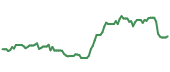
Smithfield Foods
$19.03 0.00 (0.00%) As of 11/25/2026 04:00 PM Eastern
- 52-Week Range
- $17.91
▼
$29.81 - Dividend Yield
- 6.57%
- P/E Ratio
- 8.35
- Price Target
- $24.67
Smithfield trades at about 8.2x earnings and near $19 per share. The company is best known for its packaged meats, including bacon, ham, and hot dogs, which anchor the company's revenue and earnings.
The recent acquisition of Nathan's Famous adds another well-known brand to its Packaged Meats segment, which is on track to post a fifth straight year of operating profit above $1 billion.
However, as of Nov. 24, SFD is down around 16% for the year—and the commodity side is the reason why. Lower hog and pork prices pushed the Fresh Pork segment to an $89 million operating loss last quarter. Adjusted earnings per share (EPS) fell to 26 cents from 58 cents a year earlier, and management expects that pressure to continue through the fourth quarter.
The good news is investors get paid to wait.
Smithfield pays a quarterly dividend of 31.25 cents, yielding roughly 6.6%. The company ended the quarter with about $1.18 billion in cash, which management says supports the dividend. The risk is that a long downturn could eventually test that payout.
Smithfield Foods, Inc. (SFD) Price Chart for Thursday, November, 26, 2026
McCormick: A Bargain Valuation That Deserves a Second Look
McCormick & Company, Incorporated Today
MKC
McCormick & Company, Incorporated
$49.92 +0.07 (+0.14%) As of 11/25/2026 03:59 PM Eastern
- 52-Week Range
- $43.25
▼
$72.41 - Dividend Yield
- 3.85%
- P/E Ratio
- 9.03
- Price Target
- $55.30
McCormick trades at about 8.9x trailing earnings. That's significantly below the company's historical average, which may make investors worry about the company's fundamentals.
But an explanation came in the company's Q3 earnings report, and it's much less exciting.
In January, McCormick took a controlling stake in McCormick de Mexico. Accounting rules required it to revalue its existing stake, resulting in a one-time, non-cash gain of $3.22 per share and inflating the company's trailing earnings.
Management is guiding for 2026 adjusted earnings of $3.05 to $3.13 per share. Trading at nearly $50, that puts MKC near 16x earnings. That's still a discount for a stock that has long traded at a premium.
McCormick is a clear fit for volatility-weary investors. Its beta of about 0.65 suggests it has historically moved roughly two-thirds as much as the broad market. The company also recently increased its quarterly dividend to 51 cents, bringing its annualized dividend yield to roughly 4%.
The main uncertainty is strategic. McCormick is working toward a proposed combination with Unilever's food business, with the transaction expected to close by mid-2027. Management anticipates significant earnings accretion, but large deals carry integration risk. That uncertainty helps explain why the stock is down over 27% in 2026.
McCormick & Company, Incorporated (MKC) Price Chart for Thursday, November, 26, 2026
Seneca Foods: Low Valuation Meets Improving Profitability
Seneca Foods Today
$35.27 0.00 (0.00%) As of 11/25/2026 04:00 PM Eastern
- 52-Week Range
- $21.01
▼
$42.00 - P/E Ratio
- 10.20
- Price Target
- $40.40
Seneca produces canned and frozen vegetables sold under private labels and familiar brands such as Green Giant.
Few investors follow it, and that lack of attention is part of the opportunity. However, the stock's low trading volume means even minor developments can trigger sharp price swings.
The company's recent five-for-one stock split brought its share price below $50 without changing its underlying valuation. More compelling than its low share price, however, is that the stock trades at about 10x earnings despite improving profitability.
In its fiscal Q2 2027, Seneca's pre-tax earnings on a first-in, first-out (FIFO) basis rose 47.4% to $45.7 million. The vegetable segment drove most of that growth. Management also cited encouraging holiday promotional activity from retail partners.
The FIFO figure matters because Seneca reports under last-in, first-out (LIFO) inventory accounting. LIFO can push reported earnings up or down as costs change, regardless of sales volume. Tracking earnings growth on a FIFO basis over several quarters can help investors determine whether Seneca's underlying profitability is improving and whether its low valuation represents a genuine buying opportunity.
The balance sheet is improving. Seneca voluntarily prepaid $100 million of term loans over six months. However, the company pays no dividend and does not issue formal earnings guidance.
Seneca Foods Corp. (SENEA) Price Chart for Thursday, November, 26, 2026
Why a Low P/E Ratio Is Only a Starting Point
A stock with a low P/E ratio can be attractive, but it should only be one factor in making a buying decision. Sometimes a "cheap stock" is cheap for a reason.
For example, Molson Coors NYSE: TAP has a P/E around 8.5x, but cut its 2026 forecasts. H&R Block NYSE: HRB also appears inexpensive, but its share price has swung between $39.50 and $58.67 since August.
For investors looking beyond expensive growth stocks heading into 2027, low-P/E consumer staples can offer an attractive starting point. The key is determining whether a company's low valuation reflects temporary headwinds, accounting distortions, or more persistent business challenges. Examining earnings trends, balance sheet strength, and future growth prospects can help investors distinguish an undervalued stock from one that is simply cheap for a reason.
Before you consider Smithfield Foods, you'll want to hear this.
MarketBeat keeps track of Wall Street's top-rated and best performing research analysts and the stocks they recommend to their clients on a daily basis. MarketBeat has identified the five stocks that top analysts are quietly whispering to their clients to buy now before the broader market catches on... and Smithfield Foods wasn't on the list.
While Smithfield Foods currently has a Hold rating among analysts, top-rated analysts believe these five stocks are better buys.
View The Five Stocks Here
Robotics and automation are rapidly becoming essential infrastructure across healthcare, manufacturing, logistics, and many other industries. "Physical AI" is coming. Learn which seven companies are most positioned to benefit as intelligent robots enter the workforce.
Get This Free Report
Continue following MarketBeat
Add MarketBeat as your preferred source on Google to see our latest stories in your feed.
