Shares of fintech and brokerage platform Robinhood Markets NASDAQ: HOOD fell by more than 3% on Wednesday, Oct. 28, following the company's Q3 earnings release the previous afternoon.
The sell-off came as Robinhood continues to grapple with rising expenses despite record trading volume in stocks, options, and prediction markets.
Robinhood announced adjusted earnings per share (EPS) of 60 cents, beating the analyst consensus estimate of 56 cents. But revenue of $1.42 billion fell short of Wall Street’s expectation of $1.44 billion, even though it marked an approximately 12% year-over-year (YOY) increase.
Shares of HOOD are now down more than 35% over the past year and nearly 27% from their year-to-date high on Sept. 3. Nonetheless, analysts still see strong upside for the stock over the coming year.
Robinhood Markets, Inc. (HOOD) Price Chart for Friday, October, 30, 2026
Cryptocurrency Weakness Offset Growth Elsewhere
Robinhood Markets Today
HOOD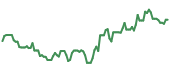
Robinhood Markets
$91.59 +0.16 (+0.17%) As of 10/29/2026 04:00 PM Eastern
- 52-Week Range
- $63.51
▼
$150.47 - P/E Ratio
- 42.21
- Price Target
- $127.45
Notably, Robinhood saw transaction-based revenue increase 19% YOY in Q3, largely driven by record event contracts, options, and stock volume. Adjusted EBITDA also reached a record $808 million, with a 57% margin.
The company also reported net deposits of $15.7 billion in Q3, followed by more than $13 billion this month so far (through Oct. 27), including $6 billion attributed to the Dell family’s contribution to Trump Accounts. Together, those deposits helped push Robinhood's year-to-date total past $68 billion, putting the company ahead of its annual 20% growth target well before year-end.
Robinhood also reported strong adoption of new products, including 5.2 million Gold subscribers, accounting for a 34% YOY increase. Additionally, the company’s agentic trading accounts now hold more than $250 million. However, growth in transaction-based revenue was partially offset by a 55% YOY decline in cryptocurrency revenue to $120 million.
Amid the ongoing crypto winter, the company suffered from traders pulling back from speculative assets in Q3. Crypto trading volume fell around 38% YOY across Robinhood's platform. Depressed prices for leading assets—including Bitcoin (BTC) and Ethereum (ETH), which are down roughly 34% and 51% from their respective all-time highs—also translated into reduced fee potential per trade.
Robinhood’s proprietary Layer-2 network, which launched on July 1, had its first full quarter of operation, bringing in $26 million in cryptocurrency revenue. But its blockchain revenue was the only highlight among the company’s crypto segment, as the platform's crypto spot trading business fell 6% quarter-over-quarter.
Prediction Markets Drive Growth as Robinhood Expands Its Reach
In spite of the Q3 disappointment, Robinhood’s diversification strategy is already proving to be effective. Event contract revenue increased sixfold to $173 million with customers trading a record 16.4 billion contracts during the quarter—more than seven times the volume of the preceding year.
A handful of forthcoming and recently enacted initiatives also underscore analysts’ bullishness.
In his earnings call comments, Robinhood CEO Vlad Tenev said the company is developing earnings contracts for its prediction markets hub, which would allow customers to trade on individual companies' earnings per share, revenue, and other financial performance metrics.
CFO Shiv Verma also highlighted Robinhood’s recent partnership with digital asset and prediction market platform Crypto.com and OG.com, an event contracts and prediction market platform launched by Crypto.com in February.
According to Verma, Robinhood received an initial 1% equity stake in Crypto.com and OG.com without any cash investment, with the potential to increase its ownership to as much as 10% based on the companies' future collaboration.
The company also received authorization to expand into Dubai and reported in-principle approval for Singapore. Meanwhile, average daily event contract volume was up about 10% to start Q4, while its no-annual-fee Robinhood Gold Card had reached 1.3 million customers and $19 billion in annualized payment volume.
Despite Current Weakness, Analysts See Big Upside Potential
Robinhood Markets Stock Forecast Today
12-Month Stock Price Forecast:$127.4539.15% UpsideModerate BuyBased on 35 Analyst Ratings | Current Price | $91.59 |
|---|
| High Forecast | $165.00 |
|---|
| Average Forecast | $127.45 |
|---|
| Low Forecast | $80.00 |
|---|
Robinhood Markets Stock Forecast DetailsRecent weakness in share price aside, Wall Street still views Robinhood favorably.
Overall, HOOD receives an analyst consensus Moderate Buy rating, with 29 of the 35 analysts currently covering the stock assigning it a Buy.
The $127.45 average price target suggests around 40% upside potential from current prices.
While still an area of concern, short interest suggests bearish sentiment may be easing.
As of Oct. 15, 4.69% of Robinhood's float was sold short, representing an 8.8% decrease in short interest from the previous reporting period. The $3.8 billion worth of shares sold short is also nearly 50% below the multi-year high of $7.56 billion recorded on Sept. 30, 2025.
Meanwhile, institutional ownership remains robust. Over the past 12 months, 920 institutional investors purchased $14.53 billion worth of shares, compared with 480 sellers disposing of $6.1 billion worth.
Before you consider Robinhood Markets, you'll want to hear this.
MarketBeat keeps track of Wall Street's top-rated and best performing research analysts and the stocks they recommend to their clients on a daily basis. MarketBeat has identified the five stocks that top analysts are quietly whispering to their clients to buy now before the broader market catches on... and Robinhood Markets wasn't on the list.
While Robinhood Markets currently has a Moderate Buy rating among analysts, top-rated analysts believe these five stocks are better buys.
View The Five Stocks Here
A strong long-term portfolio starts with companies that can survive recessions, inflation, changing consumer habits, and shifting market leadership.
This report names seven blue-chip stocks across technology, retail, consumer staples, healthcare, networking, sporting goods, and utilities that offer investors a mix of stability, income, growth, and staying power.
Get This Free Report
Continue following MarketBeat
Add MarketBeat as your preferred source on Google to see our latest stories in your feed.

