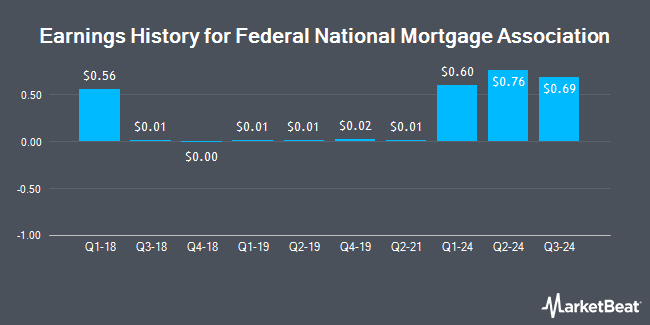
Fannie Mae (OTCMKTS:FNMA - Get Free Report) posted its earnings results on Wednesday. The financial services provider reported $0.63 EPS for the quarter, hitting the consensus estimate of $0.63, Zacks reports. Fannie Mae had a net margin of 2.22% and a negative return on equity of 49.21%.
Here are the key takeaways from Fannie Mae's conference call:
- Fannie Mae reported first-quarter net income of $3.7 billion (up 5% QoQ, 2% YoY) on stable net revenues, which lifted net worth to $112.7 billion.
- Cost-cutting and efficiency actions drove non‑interest expense down 8% QoQ and 16% YoY, lowered the administrative expense ratio to 10.2%, and management plans further automation and AI to sustain a smaller cost base.
- Multifamily credit stress increased — serious delinquencies rose, leading to higher net charge-offs and a sizable provision (including a ~$174 million PCL impact), while investment losses on MBS purchases contributed to other losses and pressured multifamily net income.
- The firm emphasized its market role, providing $116 billion of liquidity to about 385,000 households and supporting a $4.1 trillion guarantee book that backs roughly 24% of U.S. single‑family mortgage debt.
Fannie Mae Stock Performance
Shares of OTCMKTS:FNMA traded down $0.07 during midday trading on Wednesday, hitting $7.59. The company's stock had a trading volume of 1,055,751 shares, compared to its average volume of 6,903,547. The stock has a market capitalization of $8.79 billion, a price-to-earnings ratio of 2.86 and a beta of 1.73. The stock's 50 day simple moving average is $6.83 and its 200 day simple moving average is $8.97. Fannie Mae has a fifty-two week low of $3.60 and a fifty-two week high of $15.99.
Analyst Upgrades and Downgrades
Several equities research analysts have recently issued reports on the company. Keefe, Bruyette & Woods lowered their price target on Fannie Mae from $10.00 to $8.50 and set an "underperform" rating on the stock in a research report on Monday, April 20th. Zacks Research raised Fannie Mae from a "strong sell" rating to a "hold" rating in a research report on Tuesday, April 21st. B. Riley Financial reaffirmed a "neutral" rating on shares of Fannie Mae in a research report on Thursday, February 12th. Finally, BTIG Research assumed coverage on Fannie Mae in a research report on Monday, January 26th. They issued a "buy" rating and a $20.00 price target on the stock. One equities research analyst has rated the stock with a Strong Buy rating, two have issued a Buy rating, two have assigned a Hold rating and one has assigned a Sell rating to the company's stock. According to MarketBeat, Fannie Mae has a consensus rating of "Moderate Buy" and an average target price of $14.00.
View Our Latest Research Report on FNMA
Fannie Mae Company Profile
(
Get Free Report)
The Federal National Mortgage Association, commonly known as Fannie Mae OTCMKTS: FNMA, is a government-sponsored enterprise established by Congress in 1938 as part of the New Deal to support the U.S. housing market. Headquartered in Washington, DC, Fannie Mae's mission is to promote liquidity, stability and affordability in the mortgage market. The company operates by purchasing residential mortgage loans from financial institutions, pooling them into mortgage-backed securities (MBS), and providing guarantees to investors against borrower default.
In its core business, Fannie Mae works with mortgage lenders across the United States—including banks, credit unions and mortgage finance companies—to ensure a steady flow of capital for homebuyers and homeowners seeking refinancing.
Recommended Stories
This instant news alert was generated by narrative science technology and financial data from MarketBeat in order to provide readers with the fastest reporting and unbiased coverage. Please send any questions or comments about this story to contact@marketbeat.com.
Before you consider Fannie Mae, you'll want to hear this.
MarketBeat keeps track of Wall Street's top-rated and best performing research analysts and the stocks they recommend to their clients on a daily basis. MarketBeat has identified the five stocks that top analysts are quietly whispering to their clients to buy now before the broader market catches on... and Fannie Mae wasn't on the list.
While Fannie Mae currently has a Moderate Buy rating among analysts, top-rated analysts believe these five stocks are better buys.
View The Five Stocks Here
MarketBeat's analysts have just released their top five short plays for June 2026. Learn which stocks have the most short interest and how to trade them. Click the link to see which companies made the list.
Get This Free Report
Like this article? Share it with a colleague.
Link copied to clipboard.