The Thanksgiving travel window often sets the tone for the winter aviation market. Ahead of the late-November rush, domestic holiday flight bookings are running slightly behind previous levels, and middle-income household spending on winter airfare is softening.
Yet, AAA reports that domestic Thanksgiving round-trip flights booked through its services average roughly $800, up 17% year over year (YOY). This pricing resilience is no accident. Major network and hybrid carriers are actively adjusting off-peak winter seat capacity to counter macroeconomic headwinds and elevated operating costs. By reassessing marginal flights on the schedule, management teams prioritize yield management over market share.
This capacity discipline marks a structural shift for an industry historically known for chasing volume, creating a compelling potential setup for the months ahead.
Fewer Seats, Higher Yields
In past economic cycles, operators often reacted to softening passenger volume by slashing ticket prices to fill empty seats. That strategy routinely eroded margins and destroyed shareholder value. Today, network planners at United Airlines Holdings NASDAQ: UAL, Delta Air Lines NYSE: DAL, and JetBlue Airways NASDAQ: JBLU are showing a commitment to preserving margins by adjusting seat supply to match profitable demand.
By selectively adjusting off-peak winter schedules, these operators seek to capture higher unit revenues rather than filling every available seat. In the third quarter, United Airlines Holdings held capacity growth to about 1.3% year over year. This restraint coincided with nearly 16% total revenue per available seat mile growth.
United reported a modest decline in overall passenger load factor alongside a roughly 17% yield increase. Delta Air Lines mirrored this strategy, keeping third-quarter seat supply flat to drive a roughly 15.4% adjusted unit revenue expansion. For investors evaluating the travel and leisure sector, this willingness to ground uneconomic flights illustrates a disciplined focus on sustainable cash flow.
Capturing Market Share in a Post-Spirit Airspace
The broader domestic market structure supports this newfound pricing power. Spirit Airlines' liquidation earlier this year removed a layer of ultra-low-cost fare discounting from domestic travel corridors. The departure of the industry's largest budget carrier altered the supply landscape, allowing remaining operators to regain pricing leverage.
JetBlue Airways Today
$3.33 -0.13 (-3.87%) As of 11/20/2026 03:59 PM Eastern
This is a fair market value price provided by Massive. Learn more. - Price Target
- $4.98
JetBlue Airways capitalized on this consolidation by acquiring 22 former Spirit slots at LaGuardia Airport. While the airline grew systemwide capacity by 2.3% in the third quarter, it strategically expanded local seat capacity in key markets like Fort Lauderdale. This targeted approach lifted third-quarter unit revenue by about 18.4%.
Beyond physical seat constraints, carriers rely on capital-light revenue streams to bolster operating margins without adding excess inventory. Delta Air Lines continues to leverage its lucrative American Express co-brand partnership, which is projected to yield over $9 billion in remuneration this year.
Similarly, the capital-light Blue Sky loyalty and booking partnership between United Airlines Holdings and JetBlue Airways reached key milestones. Travelers have redeemed more than one billion TrueBlue points on United flights, while JetBlue's loyalty revenue grew roughly 20%. These diversified income channels help offset the cyclical nature of physical ticket sales.
Up-Gauging Against Fuel and Infrastructure Headwinds
Capacity discipline largely reflects severe operating cost pressures. Geopolitical supply tensions pushed third-quarter jet fuel prices up about 60% year over year across the sector. This spike added roughly $1.6 billion to Delta Air Lines' adjusted fuel expenses and $1.8 billion to United Airlines Holdings' ledger. Non-fuel unit costs also trended higher due to recent labor contract ratchets.
Delta Air Lines Today
DAL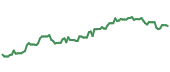
Delta Air Lines
$80.01 -3.16 (-3.80%) As of 11/20/2026 03:59 PM Eastern
This is a fair market value price provided by Massive. Learn more. - 52-Week Range
- $55.28
▼
$95.68 - Dividend Yield
- 1.07%
- P/E Ratio
- 15.97
- Price Target
- $100.15
Infrastructure disruptions remain a persistent headwind. A nationwide FAA communications outage caused widespread cancellations affecting nearly 18% of scheduled U.S. flights during the mid-November disruption. Analysts estimate this disruption could cost Delta Air Lines up to $244 million and JetBlue Airways up to $73 million in the fourth quarter. Extended regulatory flight caps at constrained hubs like Chicago O'Hare further limit supply expansion.
To counter these margin pressures, carriers are emphasizing higher-yield products. Delta Air Lines and United Airlines Holdings continue to see resilient demand for their high-margin premium cabins, which absorb cost shocks better than basic economy fares. JetBlue Airways is following suit with its turnaround plan. The carrier recently raised first checked baggage fees to the $50-$70 range and plans to debut its domestic first-class product in early December.
Fortunately for unhedged operators, recent macroeconomic shifts offer some immediate relief. With U.S. crude oil prices retreating below $90 per barrel, airlines could capture favorable cost savings against their conservative fourth-quarter fuel estimates of $4.25 to $4.80 per gallon. At its recent quarterly fuel consumption rate, JetBlue's fuel expense would fall by roughly $22 million for every 10-cent decline in jet fuel prices.
Finding Value in Airline Cash Flows and Turnarounds
Focusing on capacity-disciplined operators separates self-funding industry leaders from distressed turnaround stories. Legacy carriers with durable margins generally absorb energy and regulatory shocks while preserving equity value.
Delta Air Lines maintains a healthy balance sheet with a debt-to-equity ratio near 0.42 and projects about $2.5 billion in free cash flow for the year. Delta successfully executed a $500 million debt refinancing, demonstrating strong access to credit despite elevated interest rates. Smart money appears to recognize this stability. Berkshire Hathaway increased its stake in Delta by 12% in the third quarter, building a position valued near $5.4 billion.
United Airlines Today
UAL
United Airlines
$101.02 -4.51 (-4.27%) As of 11/20/2026 03:59 PM Eastern
This is a fair market value price provided by Massive. Learn more. - 52-Week Range
- $84.64
▼
$138.77 - P/E Ratio
- 9.24
- Price Target
- $156.69
United Airlines Holdings also presents an interesting profile. United Airlines stock trades at roughly nine times forward earnings and carries a low price-to-cash-flow multiple. United holds about $17.7 billion in liquidity, providing a buffer as it manages capital expenditures. The recent regulatory certification of Boeing's 737 MAX 10 clears a multi-year delivery bottleneck, setting United up for fleet-efficiency gains as the company moves into 2027.
JetBlue Airways operates as a higher-beta recovery play. Trading at a fraction of its book value, the company carries a heavier debt load but retains about $2.2 billion in liquidity. While JetBlue reported operating cash burn in the third quarter, aggressive capacity cuts and unit revenue growth signal a stabilizing foundation. An independent director recently bought 100,000 shares of JetBlue on the open market, signaling internal confidence in the turnaround strategy.
Adjusting Your Radar for Airline Investments
The aviation industry is navigating a complex environment of rising operational costs, infrastructure constraints, and shifting consumer budgets. However, management teams are adapting by prioritizing yield and profitability over raw market share.
Investors monitoring the travel sector should watch how effectively these companies manage their winter schedules. Favorable capacity adjustments, moderating fuel costs, and expanding premium product lines create a supportive backdrop for margin expansion. Those with a long-term horizon might consider tracking enterprises that consistently demonstrate operational discipline and sustainable free cash flow generation as the market moves toward 2027.
Before you consider United Airlines, you'll want to hear this.
MarketBeat keeps track of Wall Street's top-rated and best performing research analysts and the stocks they recommend to their clients on a daily basis. MarketBeat has identified the five stocks that top analysts are quietly whispering to their clients to buy now before the broader market catches on... and United Airlines wasn't on the list.
While United Airlines currently has a Moderate Buy rating among analysts, top-rated analysts believe these five stocks are better buys.
View The Five Stocks Here
Could the next Tesla, NVIDIA, and Google be hiding in plain sight? Discover seven growth stocks with the potential to become tomorrow's market giants, fueled by breakthroughs in AI, nuclear energy, cybersecurity, and more.
Get This Free Report
Continue following MarketBeat
Add MarketBeat as your preferred source on Google to see our latest stories in your feed.
