As the midterm election approaches, investors may try to anticipate how different potential outcomes could impact the market. After two years of unified control by the Republican party, polls and analysis are predicting a divided government, with at least one of the chambers of Congress controlled by Democrats beginning in 2027. Of course, these remain predictions and, therefore, difficult to base investment decisions on prior to confirmation.
Nonetheless, a divided government may mean that one sector could thrive: historically, healthcare stocks tend to perform well in such environments. Two exchange-traded funds (ETFs) in particular may be worth considering for investors anticipating a favorable environment for the sector in the coming months.
Why Divided Government Can Be a Boost to Health Care Names
Healthcare stocks can benefit from divided government because this electoral outcome often leads to legislative gridlock. For the sector, this means that a push from Democrats to tighten regulations on elements like drug prices will likely meet resistance from lawmakers on right. Similarly, any Republican efforts to repeal the Affordable Care Act or make other similar wholesale changes may run into additional roadblocks.
The result could be a prolonged period of status quo for health care law and regulations, which tends to benefit companies that are already performing well.
XLV: A Good Time for a Broad Sector Fund
Sector-focused funds can be effective plays for investors anticipating broad drivers of growth in one corner of the market. The Health Care Select Sector SPDR Fund NYSEARCA: XLV maintains its status as a go-to option for wide exposure to healthcare names, even nearly 30 years after launch.
Health Care Select Sector SPDR Fund Today
XLV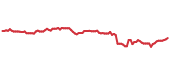
Health Care Select Sector SPDR Fund
$179.28 -2.02 (-1.11%) As of 10/23/2026 04:10 PM Eastern
- 52-Week Range
- $141.97
▼
$182.25 - Dividend Yield
- 1.42%
- Assets Under Management
- $46.73 billion
XLV combines an affordable annual fee of 0.08% with robust assets topping $44 billion and a similarly active trading volume. The fund holds about 73 large-cap names across the domestic healthcare space. Despite a fairly long list of positions, XLV is concentrated in a handful of companies like Eli Lilly and Co. NYSE: LLY and Johnson & Johnson NYSE: JNJ, which represent about 15% and 10% of the total portfolio, respectively.
This does mean that shifts in a few prominent names can have an outsized impact on XLV's overall performance—though so far in 2026, both LLY and JNJ have already outperformed the broader market. Nonetheless, XLV remains a strong benchmark for the industry as a whole.
One of the primary appeals of this fund is that it does not specialize, but rather provides diversified exposure to companies in the pharmaceuticals, managed care, services, and medical devices subindustries. This makes it one of the most comprehensive single investments available to investors expecting a divided government and the potential benefits it might bring to the sector overall.
IHF: Tapping Into Companies That Benefit Most From Status Quo
Managed care and healthcare services firms face the threat of significant upheaval to their relevant regulations from fully unified governments that can more easily pass legislation. For this reason, these firms may be among the most likely to benefit from the status quo in Washington, D.C.
iShares U.S. Healthcare Providers ETF Today
IHF
iShares U.S. Healthcare Providers ETF
$60.38 -0.52 (-0.85%) As of 10/23/2026 04:10 PM Eastern
- 52-Week Range
- $40.85
▼
$60.97 - Dividend Yield
- 0.89%
- Assets Under Management
- $1.40 billion
Investors looking for a more targeted approach to the sector than XLV allows might therefore consider the iShares U.S. Healthcare Providers ETF NYSEARCA: IHF, a fund with a special focus on this subindustry across 63 portfolio positions. Like XLV, IHF focuses primarily on large-cap stocks, but it also has a smaller portion of the portfolio given over to mid- and even small-caps.
Given IHF's unique investment strategy, investors should be prepared to pay a bit more; its expense ratio is more than four times that of XLV. Still, IHF has already beaten XLV's year-to-date (YTD) performance of about 15% with its own returns of roughly 23%.
Despite its fairly broad portfolio, IHF is, like XLV, heavily concentrated in a few names, with a single holding—UnitedHealth Group Inc. NYSE: UNH—taking up about 21% of the basket. This often means investors will use IHF as a short-term tactical tilt. Buy-and-hold investors looking for healthcare options should beware that IHF's concentration could leave it susceptible to greater volatility than an option like XLV.
A bet on IHF is a more aggressive position for an investor to take than a bet on XLV, and it comes with the potential for both higher rewards and greater risks. For those with a strong conviction that the results of the midterms could benefit this sector, though, IHF is an attractive way to make a big bet.
Before you consider Health Care Select Sector SPDR Fund, you'll want to hear this.
MarketBeat keeps track of Wall Street's top-rated and best performing research analysts and the stocks they recommend to their clients on a daily basis. MarketBeat has identified the five stocks that top analysts are quietly whispering to their clients to buy now before the broader market catches on... and Health Care Select Sector SPDR Fund wasn't on the list.
While Health Care Select Sector SPDR Fund currently has a Hold rating among analysts, top-rated analysts believe these five stocks are better buys.
View The Five Stocks Here
Nuclear energy is entering a new growth cycle as rising power demand, expanding data centers, and renewed policy support bring the sector back into focus. After strong gains in recent years, the most impactful phase of nuclear investment may still be ahead. This report highlights seven nuclear energy stocks positioned across the value chain—combining near-term revenue with long-term upside as next-generation technologies scale. Click the link below to unlock the full list.
Get This Free Report
Continue following MarketBeat
Add MarketBeat as your preferred source on Google to see our latest stories in your feed.
Like this article? Share it with a colleague.
Link copied to clipboard.

