American Express Co. NYSE: AXP reported third-quarter 2026 earnings before the opening bell on Oct. 23. The results were solid. Yet when the market opened, AXP was the worst-performing stock in the Dow Jones Industrial Average (DJIA).
American Express Today
AXP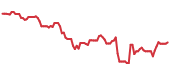
American Express
$313.10 -12.07 (-3.71%) As of 10/23/2026 03:59 PM Eastern
This is a fair market value price provided by Massive. Learn more. - 52-Week Range
- $290.97
▼
$387.49 - Dividend Yield
- 1.21%
- P/E Ratio
- 18.40
- Price Target
- $364.89
Investors who follow American Express have seen this movie before. The company delivers strong quarterly results, and the stock sells off anyway. The only questions are how long the selling will last and whether it should scare away long-term investors.
The company’s announcement of a 5% workforce reduction may help explain the selling this time. Job cuts rarely make for a feel-good headline.
However, the restructuring charge was funded by a one-time gain. That gain came from selling the company’s stake in Global Business Travel Group NYSE: GBTG.
In other words, management used a windfall to make the business leaner. Furthermore, the company said they intend to use the savings to return value to shareholders.
A more likely driver of the pullback is the macroeconomic picture. That matters because of what American Express represents. Its customer base skews toward upper-income consumers and business customers. Those groups do the majority of the spending in today’s economy. That’s particularly true in travel and entertainment (T&E).
Record Revenue Shows the Premium Consumer Is Still Spending
To oversimplify it, as these consumers go, so goes the economy. Investors treat Amex as a real-time read on that consumer. Any hint of fatigue gets priced in quickly. However, at least for now, the AXP earnings report suggests that spending is stable.
American Express posted record third-quarter revenue of $20.1 billion, up 9% year-over-year. Diluted earnings per share (EPS) rose 31% to $5.42. Excluding the GBTG gain and restructuring charge, adjusted EPS was $4.68—still up 13% from $4.14 a year ago.
Total billed business grew 8% to $454 billion. Travel and entertainment spending led the way, rising 10% on a foreign exchange-adjusted basis. Airline billings jumped 13%. Within U.S. Consumer Services, T&E spending climbed 11%. That’s the premium consumer in action. These customers aren’t pulling back on discretionary spending yet.
Card fees tell a similar story. Net card fees rose 16% to nearly $3 billion. That growth reflects the refreshed U.S. Platinum Card and growth in premium card portfolios. Customers are paying higher annual fees and sticking around. About 76% of new accounts came on fee-paying products.
The pipeline looks healthy, too. Spending by Gen Z customers in U.S. Consumer Services jumped 35%. Millennial and Gen Z customers accounted for 65% of new global consumer accounts.
Raised Guidance Signals Confidence
Management raised its full-year 2026 EPS guidance to a range of $18.30 to $18.60 on a GAAP basis. On an adjusted basis, the range is $17.60 to $17.90. That’s up from the prior range of $17.30 to $17.90. The company also reaffirmed its outlook for 10% revenue growth.
CEO Stephen Squeri pointed to strength in billings, new acquisitions, Card Member retention, and credit quality. Management teams rarely raise guidance with one quarter left if they see storm clouds forming.
Credit Quality Is the Key Detail
Perhaps the most important number in the report is the net write-off rate. It fell to 1.8% from 1.9% a year ago and 2.0% last quarter. Card balances 30 or more days past due held steady at 1.2%.
Consolidated provisions for credit losses also fell to $985 million from $1.29 billion a year ago. Part of that decline came from a $215 million reserve release tied to a model update. Still, the underlying write-off trend is moving in the right direction.
This matters for the macro debate. If upper-income consumers were feeling stress, it would show up in delinquencies first. So far, it isn’t.
Why Investors Are Selling on Good News
So why the selling? The commercial segment offers one clue. Commercial Services billings grew just 3%. That was held back by exits from the Lowe’s NYSE: LOW and Amazon NASDAQ: AMZN small business co-branded portfolios. Excluding those exits, growth was 5%. Small business spending on goods and services was soft, rising only 2%.
Investors may also be looking past the quarter. When the market worries about growth, it sells the bellwether first and asks questions later. That’s a behavioral reaction that long-term investors can use to their advantage.
Valuation Leaves Room for Upside
AXP stock isn’t expensive at around 19x earnings. That’s a reasonable multiple for a company with a 38% return on equity through the first nine months of 2026. Shares are also trading about 15% below their consensus price target.
American Express Company (AXP) Price Chart for Saturday, October, 24, 2026
The chart shows the stock bouncing off support near $300 in recent weeks. However, shares remain below their 50-week moving average near $334. A move back above that level would suggest the market is coming around.
The company is also returning capital. Amex repurchased $1.6 billion in stock and paid $600 million in dividends during the quarter. Its share count has fallen to 671 million from 689 million a year ago.
The early sell-off says more about macro anxiety than about American Express. Record revenue, raised guidance, and improving credit point to a premium consumer still in good shape. As long as that holds, pullbacks like this one may look like opportunities in hindsight.
Before you consider American Express, you'll want to hear this.
MarketBeat keeps track of Wall Street's top-rated and best performing research analysts and the stocks they recommend to their clients on a daily basis. MarketBeat has identified the five stocks that top analysts are quietly whispering to their clients to buy now before the broader market catches on... and American Express wasn't on the list.
While American Express currently has a Moderate Buy rating among analysts, top-rated analysts believe these five stocks are better buys.
View The Five Stocks Here
Nuclear energy is entering a new growth cycle as rising power demand, expanding data centers, and renewed policy support bring the sector back into focus. After strong gains in recent years, the most impactful phase of nuclear investment may still be ahead. This report highlights seven nuclear energy stocks positioned across the value chain—combining near-term revenue with long-term upside as next-generation technologies scale. Click the link below to unlock the full list.
Get This Free Report
Continue following MarketBeat
Add MarketBeat as your preferred source on Google to see our latest stories in your feed.

