The calendar Q1 2026 earnings reports were incredibly good. The result at the end of the season is that the S&P 500 grew earnings by more than 28%, more than doubling the best-case scenario presented ahead of the period.
While impressive, what’s more impressive is that the forward outlook was also improved, expects strength to persist into next year, and is likely to be cautious. The takeaway for investors is that a robust tailwind supports broad market activity, and it's only getting stronger.
Q1 earnings strength was broad-based, but the leading sector was technology—no surprise there. The surprise was the strength seen in companies other than NVIDIA NASDAQ: NVDA.
NVIDIA was strong, no doubt about it. The company has been growing at a hyper pace for over three years, but spending is shifting to nuts-and-bolts plays, as reflected in the results, and positive feedback loops are forming. When AI infrastructure comes online, applications and new use cases follow, leading to increased demand and helping sustain the cycle.
The communications sector was also strong, coming in second with earnings up by 50%. The season-end tally is more than 5000 basis points better than expected, underpinned by results from Mag Seven and large-cap stocks such as Alphabet NASDAQ: GOOGL, Netflix NASDAQ: NFLX, and Meta Platforms NASDAQ: META. The caveat is that, while AI underpinned their strengths, one-offs were also involved.
Either way, the sector and these companies are expected to continue driving index-level strength, as Alphabet and Meta Platforms are critical to AI and its applications, while Netflix is a category-leading juggernaut that is still not fully flexing its muscles.
The Winner From Q1? Marvell Technology, Hands Down
Marvell Technology Today
MRVL
Marvell Technology
$275.54 +7.46 (+2.78%) As of 11:05 AM Eastern
This is a fair market value price provided by Massive. Learn more. - 52-Week Range
- $70.68
▼
$329.88 - Dividend Yield
- 0.09%
- P/E Ratio
- 90.75
- Price Target
- $272.00
Marvell NASDAQ: MRVL is the clear winner from Q1.
Not only did the company produce robust results, accelerating due to AI demand, but it also secured a major investment from NVIDIA.
NVIDIA sank $2 billion into the company, securing future supply while strengthening its supply chain and preparing for next-gen transitions.
The next transition will be toward more widespread use of photonics and optics, categories in which Marvell excels.
And if this isn’t enough, NVIDIA CEO Jenson Huang capped off the King-making, later calling Marvell the most likely stock to hit a trillion-dollar valuation.
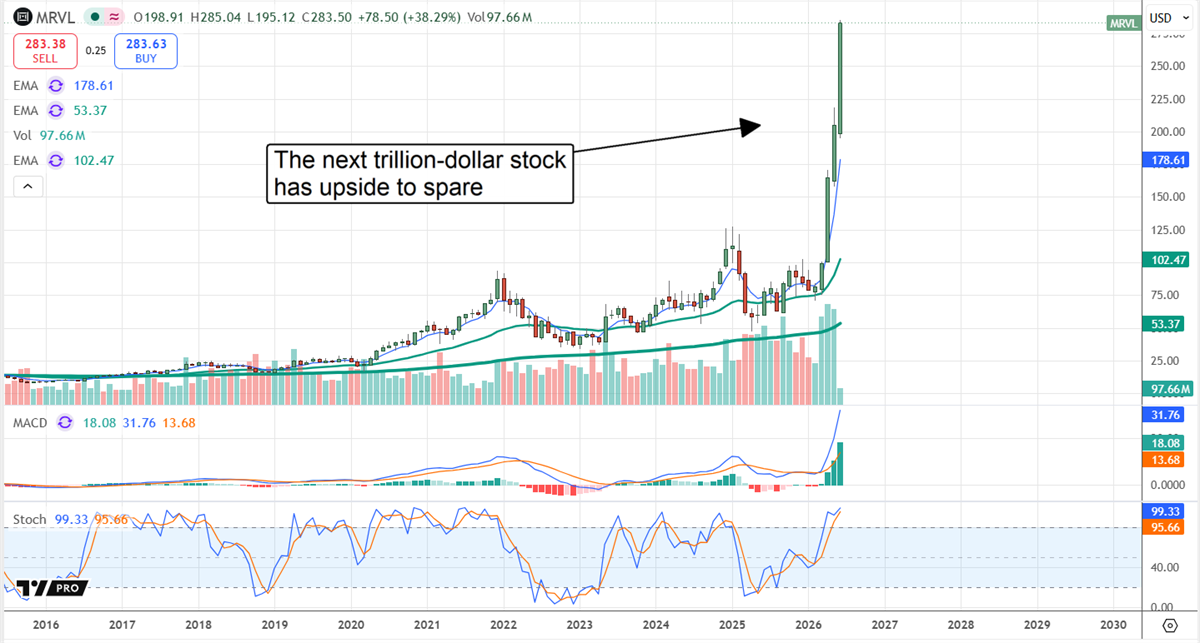
Marvell is the Most Upgraded stock on MarketBeat’s platform coming out of the reporting period. MarketBeat tracked 48 revisions in the trailing 90 days as of June 1, 2026, which says something for a stock with 37 analysts covering it. Some issued more than one revision, helping to lift the consensus by approximately 75% for the period.
The only bad news is that, with shares trading over $300, the consensus price target of $215 assumes substantial downside, but the trend points to the high end of the range and is leading the market.
Assuming Marvell can reach a trillion-dollar valuation, that would represent a more than 4x increase, or roughly 300% upside.
Amazon: Still the Leader in Hyperscale Cloud Business
Amazon.com Today
$251.31 +3.08 (+1.24%) As of 11:05 AM Eastern
This is a fair market value price provided by Massive. Learn more. - 52-Week Range
- $196.00
▼
$287.20 - P/E Ratio
- 20.23
- Price Target
- $321.63
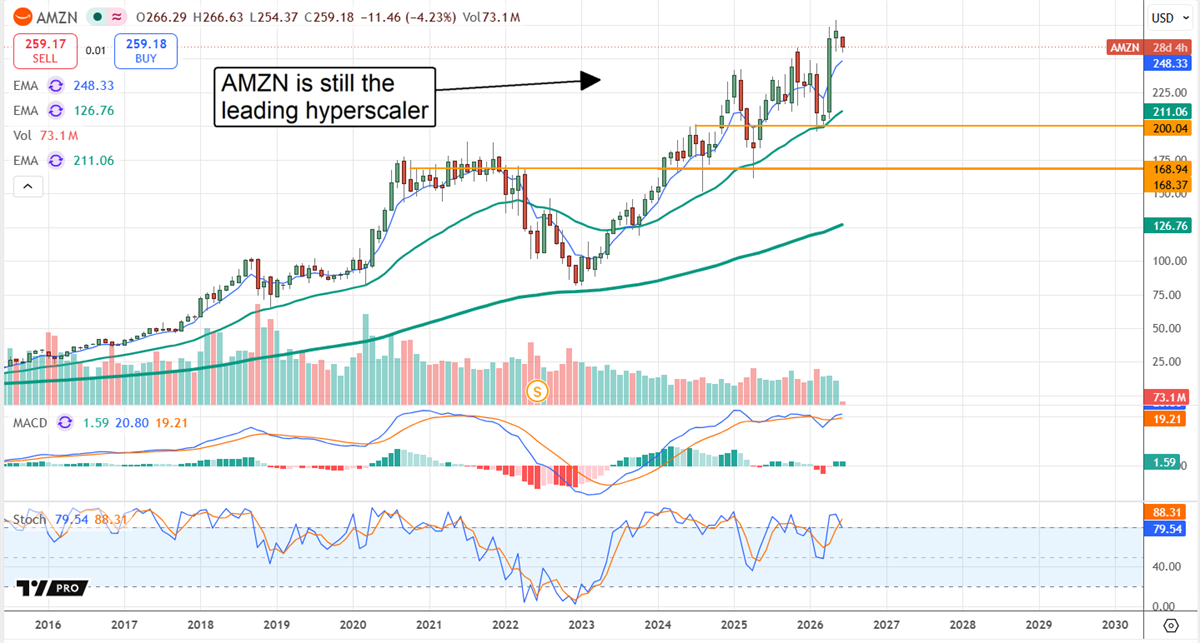
Hyperscalers are being boosted by AI across the board, including Amazon NASDAQ: AMZN.
Its Q1 earnings release revealed the fastest pace of AWS growth in nearly four years, approaching 30%, and it is likely to remain strong due to AI demand.
Among the drivers are its proprietary chips, and the core consumer business is also strong. The takeaway is that Amazon emerged as the second-most-upgraded stock for the period, and the trend points to robust upside in its stock price.
The consensus price target, which has increased by 13% since the start of the reporting period, forecasts a 25% upside, with another nearly 50% possible at the high end.
ServiceNow Gets Price Target Reset: Gains Capped for NOW
ServiceNow Today
$136.09 -1.67 (-1.21%) As of 11:05 AM Eastern
This is a fair market value price provided by Massive. Learn more. - 52-Week Range
- $81.24
▼
$192.97 - P/E Ratio
- 85.11
- Price Target
- $147.00
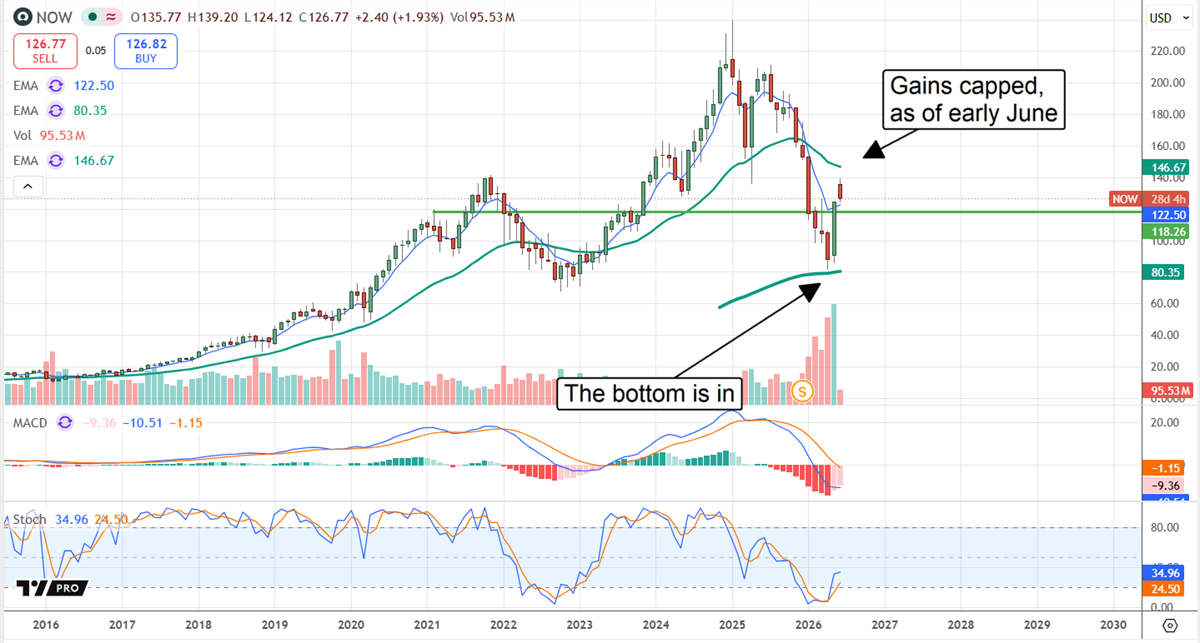
ServiceNow NYSE: NOW had a solid quarter, but slowing growth and tepid comps relative to consensus figures sapped market sentiment.
The result is a number of price target reductions that are impacting price action, but don’t read too much into that.
While numerous price target reductions are logged, they are offset by an equally large number of reaffirmed targets, leaving sentiment pegged at Moderate Buy and a modest double-digit upside forecasted at the consensus.
The likely outcome is that ServiceNow’s stock price will wallow near recent lows until later in the year, when more news becomes available.
Catalysts include the shift to usage-based AI pricing and the shift to agentic services. The question is whether they will accelerate growth, or if this large cap has seen the last of double-digit gains.
As it stands, the analyst and institutions remain optimistic; institutions own more than 80% of the stock and bought aggressively in Q1 when shares were at multiyear lows.
Before you consider NVIDIA, you'll want to hear this.
MarketBeat keeps track of Wall Street's top-rated and best performing research analysts and the stocks they recommend to their clients on a daily basis. MarketBeat has identified the five stocks that top analysts are quietly whispering to their clients to buy now before the broader market catches on... and NVIDIA wasn't on the list.
While NVIDIA currently has a Buy rating among analysts, top-rated analysts believe these five stocks are better buys.
View The Five Stocks Here
Tesla, Nvidia, and Google helped shape the last era of market growth, but the next wave could come from a new group of companies. Inside this report, you’ll find 7 stocks that could play a major role in the next tech-driven market boom.
Get This Free Report
Continue following MarketBeat
Add MarketBeat as your preferred source on Google to see our latest stories in your feed.
